H and H Spices
To use dryers, grinders, and packaging already in the coffee plant, Hoffmann-Hayman developed H and H Brand Spices—the same “grocery annex” strategy described on H and H Tea, H and H Cocoa, and H and H Extracts (see also the Welcome overview). Early fills were sold in small upright tins and cardboard-and-metal composite cans in standard 1 oz, 1½ oz, and 4 oz sizes.
Across the range, labels often read “Packed for Hoffmann-Hayman Coffee Co., San Antonio, Texas”—the same wording the collection keeps circling on whether spices were ground in-house or co-packed under H and H livery. The long black pepper donation post walks through lid standardization, overwrap scraps, and a mistaken “ANCHO” reading that pointed toward Anchor spices from another roaster.
November 1932 — separate Spice & Extract Department
The San Antonio Express-News of Monday, 28 November 1932 reports that Hoffmann-Hayman established a separate Spice and Extract Department that month, simultaneously with the firm’s occupancy of the new Delaware Street plant. R. W. Menger (secretary) announced the move; the article makes two operationally significant claims:
- Before November 1932 spices and extracts had been sold by the same sales force as coffee. The 1932 creation of a separate department with special salesmen was driven by demand growth.
- The complete H. and H. line by November 1932 ran to over 33 different spices and extracts — far more than the dozen-or-so flavors currently catalogued on this page or implied by the 1923 special-edition products display.
The article also notes that “Hoffmann-Hayman Company, pioneer roaster and blender of fine coffees, has for many years produced spices and extracts under the H. and H. brand” — placing the spice line’s internal origin earlier than the 1923 first-documented promotion. Photo credit on the new-department display photo: Patterson.
Implication for this page’s catalog
The 10 flavors currently listed below are a partial inventory, not a complete one. Future research targets: identify the other ~23 flavors and extracts in the 1932 line. Possible candidates include the vanilla, lemon, and other extracts documented separately on H and H Extracts, plus less-common spice categories from the 1923 Light “Spices Come From Many Plants” survey (cloves, mace, cardamom, caraway, coriander, etc.).
Products
Flavors (partial — see November 1932 note above)
- Allspice
- Black pepper
- White pepper
- Chili powder
- Cinnamon
- Cumin
- Dutch Lunch Mustard (1933) — see § Dutch Lunch Mustard below
- Ginger
- Nutmeg
- Paprika
Packaging
Representative pieces from the gallery; many have deeper photo sets in the posts linked under Collection posts below.
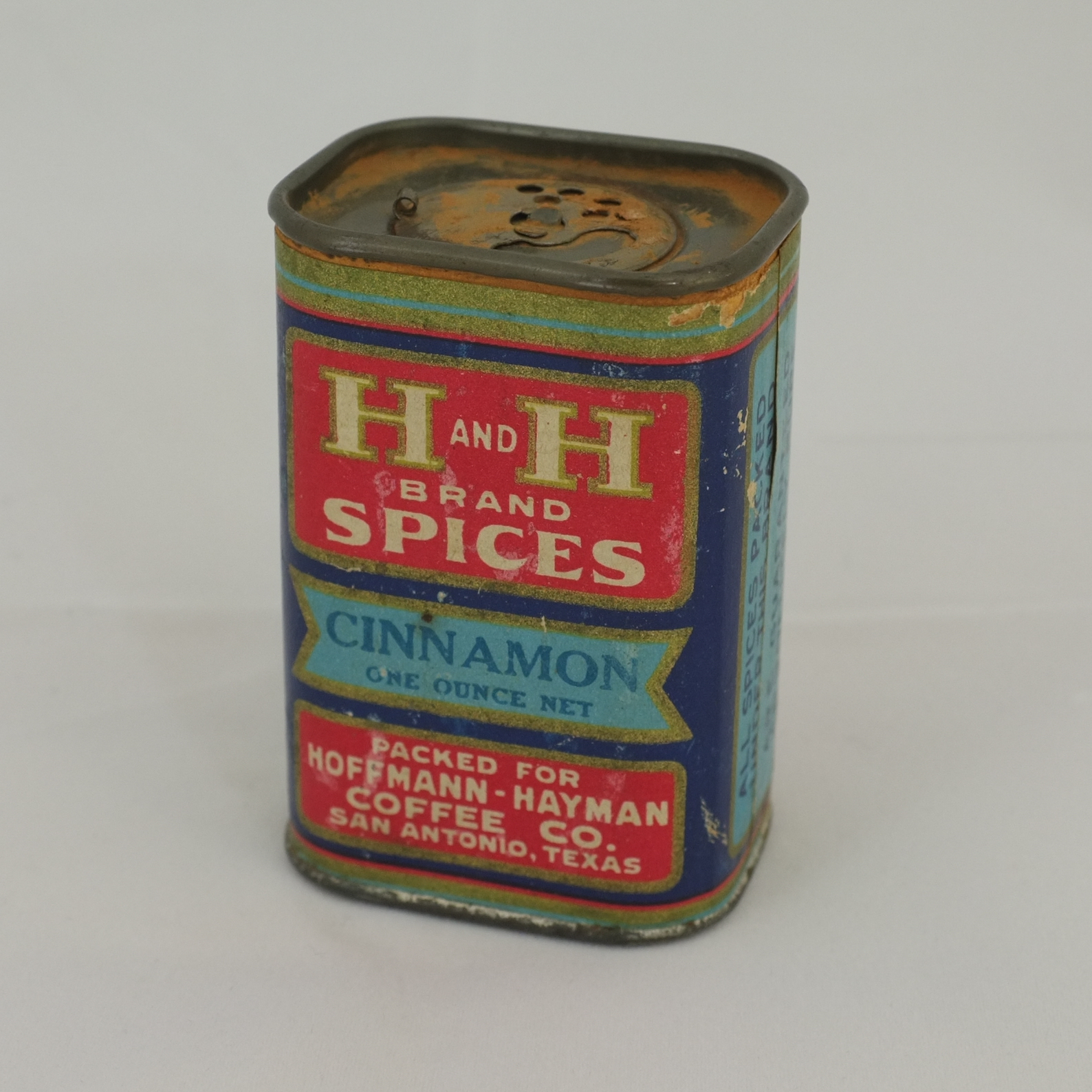
- 1 oz cinnamon
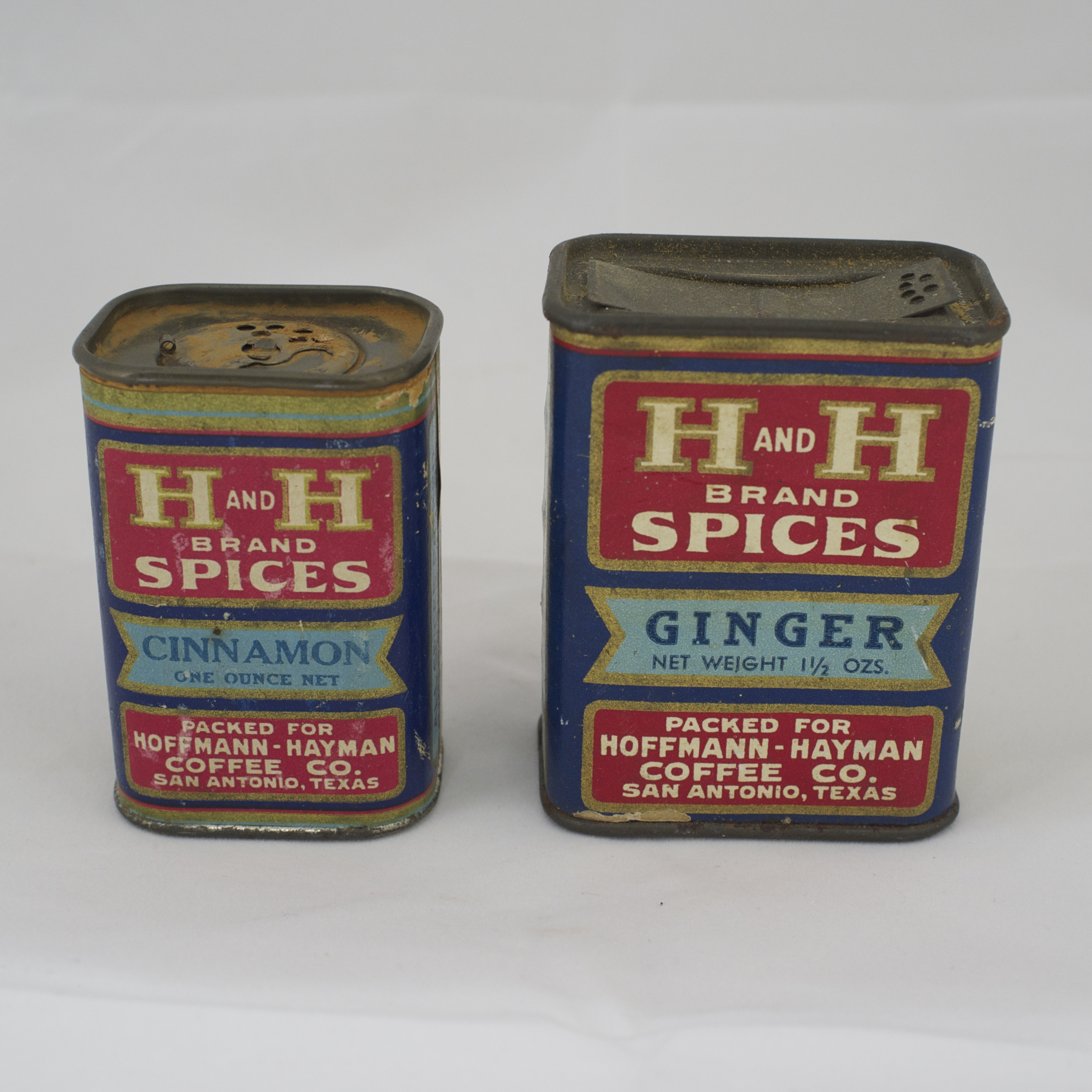
- 1½ oz ginger (cardboard body, metal ends)
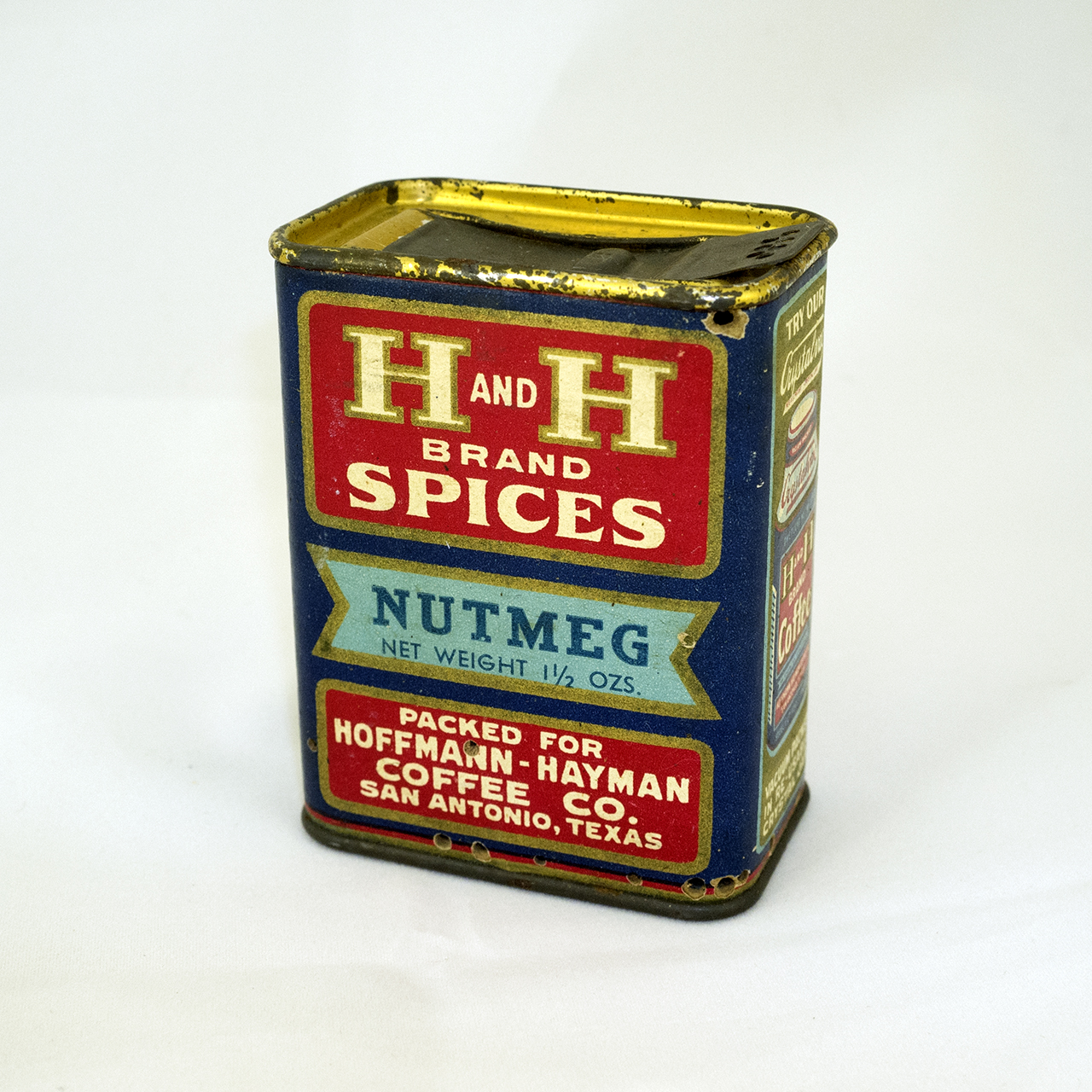
- 1½ oz nutmeg (Euless acquisition)
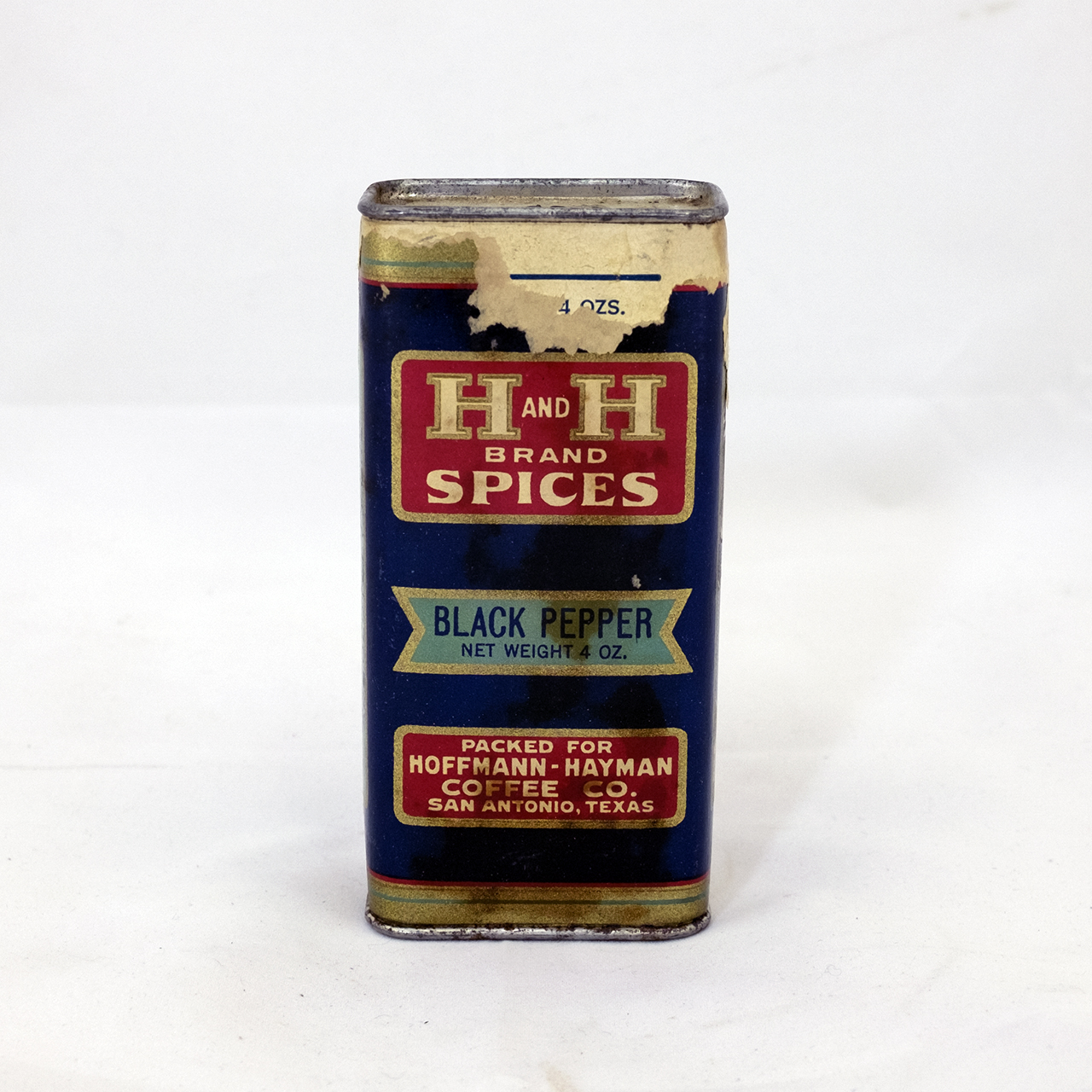
- 4 oz black pepper (Torrington donation)
- 1½ oz allspice
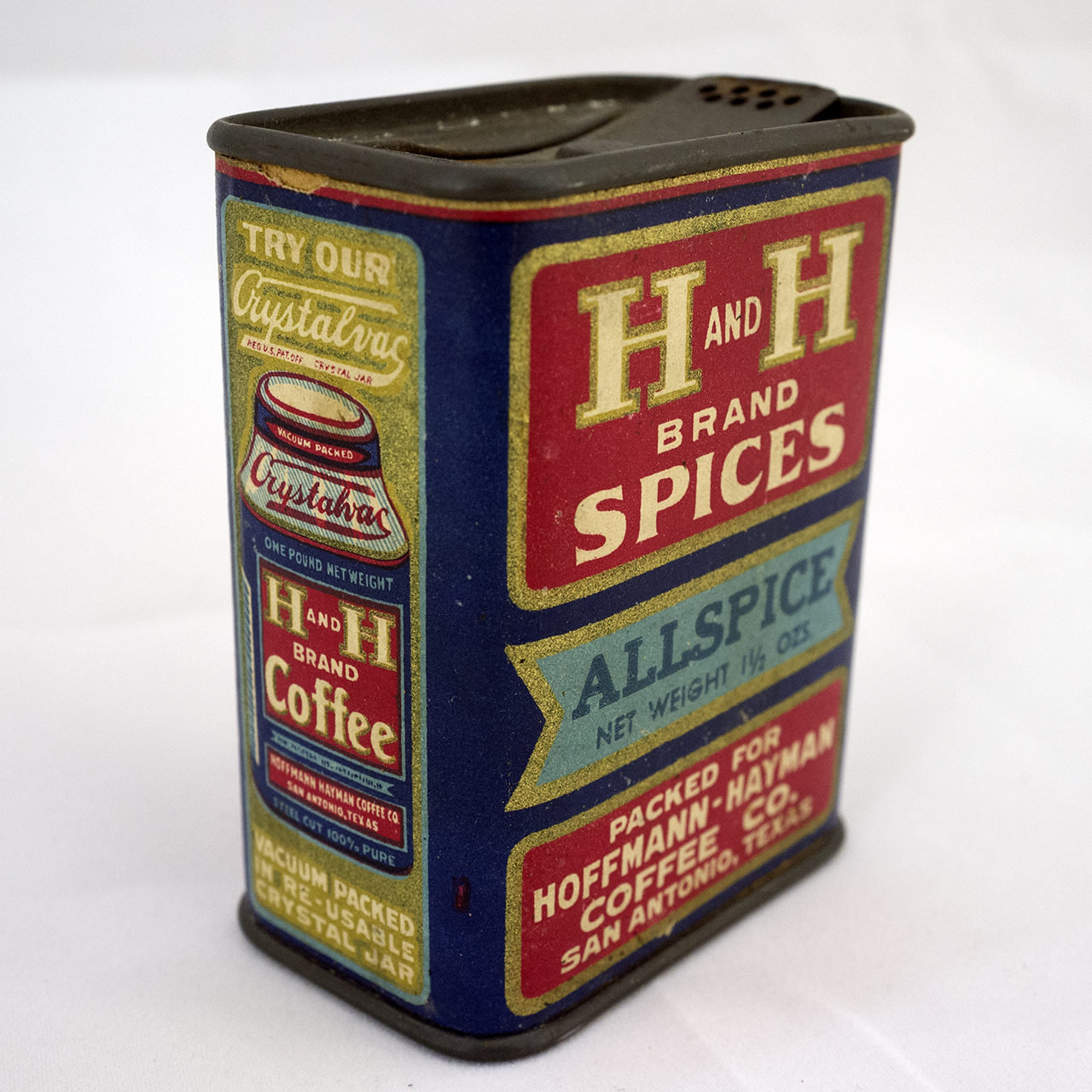
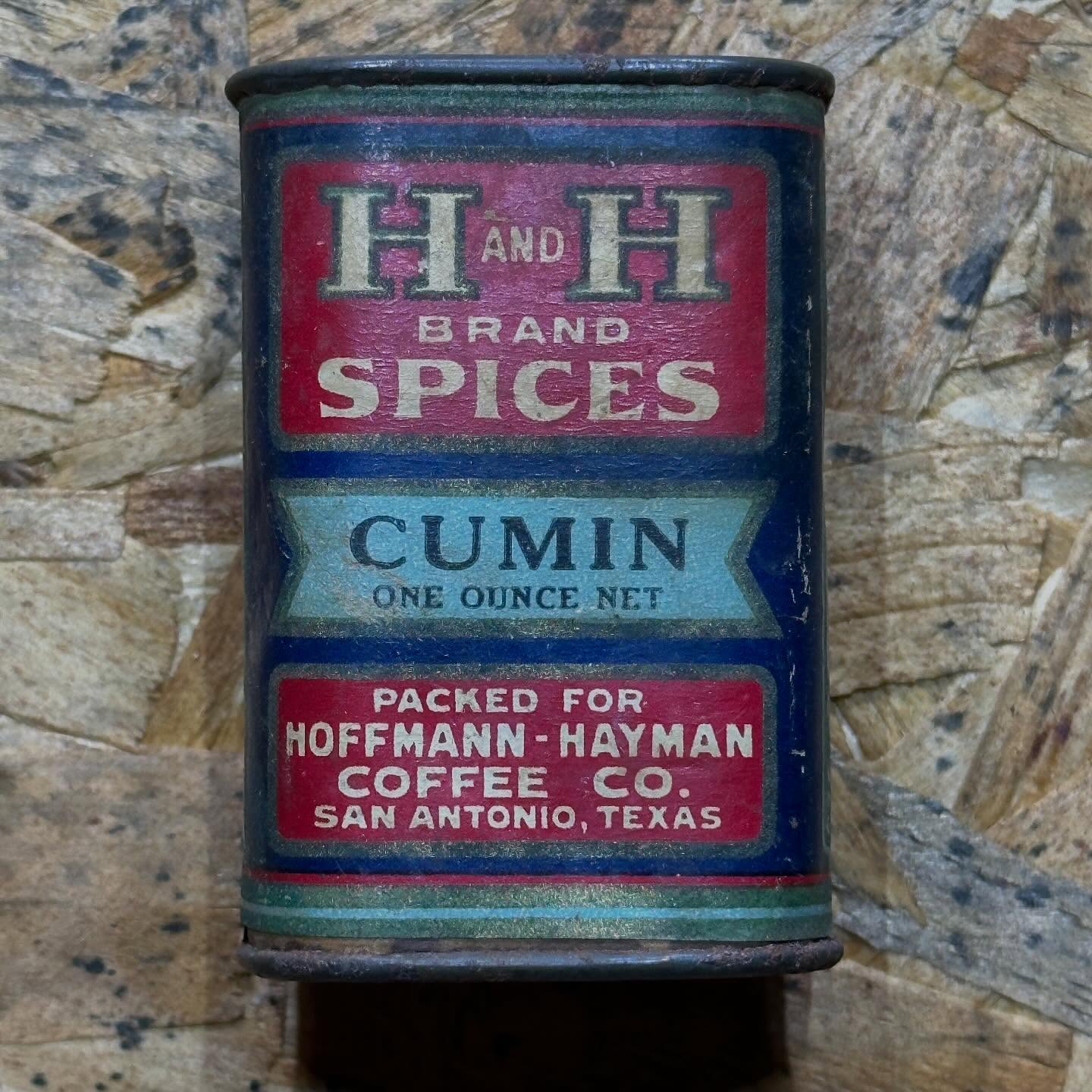
- 1 oz cumin (McAllen, 2025)
Collection posts
- H and H Spices — allspice tin — first 1½ oz allspice in the set.
- Nutmeg and cinnamon (Euless) — paired 2015 pickups.
- Nutmeg tin, 1½ oz (San Antonio, 2018) — full metal upright; “packed for” wording.
- Black pepper, 4 oz — donation story, overwrap, Anchor comparison.
- Ginger tin — cardboard-sided 1½ oz ginger.
- Cumin, 1 oz — latest small tin in the livery.
- Cinnamon tin — early 1 oz example in the same brand family.
Reference photography
Dealer and reference-only spice specimens are indexed in Reference (vs. tins photographed under Packaging).
November 1933 — Dutch Lunch Mustard
The News (San Antonio), Saturday, 25 November 1933, page 6, carries a “Stellar Value” display ad for H & H Dutch Lunch Mustard — a glass-jar condiment under the same Hoffmann-Hayman umbrella. Two specific facts the ad anchors:
- Composition: “Contains No Horseradish or Turmeric.” (A deliberate composition claim — most period mustards used one or both as filler / color.)
- Era marker: The ad carries the NRA “We Do Our Part” Blue Eagle badge — placing it firmly within the National Recovery Administration period (1933 – 1935), and identifying it as a depression-era condiment expansion.
- Promotional banner: “Watch for H and H Star Values” — a broader promotional umbrella in late-1933.
The Dutch Lunch Mustard glass jar remains on the Wanted list — no in-collection example has been photographed.
Newspaper & period branding
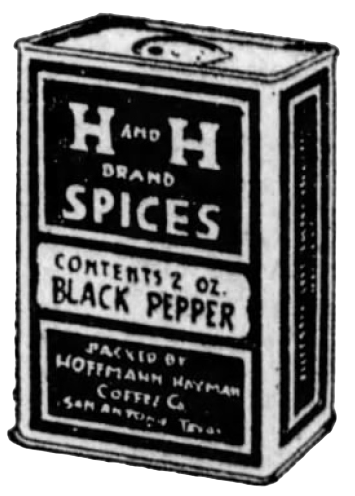
Black pepper tin from the 26 Aug 1923 San Antonio Light spices, extracts & cocoa spread (transcription).
Related lines
- H and H Tea · H and H Cocoa · H and H Extracts — parallel Hoffmann-Hayman grocery lines (the non-coffee adjunct cluster).
- H and H Product Line — product-family index.
- Hoffmann-Hayman Coffee Company — corporate hub; the November 1932 separate Spice & Extract Department is one of the operational milestones at the Delaware Street plant.
Open questions
- In-house ground vs. co-packed — labels read “Packed for Hoffmann-Hayman Coffee Co., San Antonio, Texas.” Whether spices were ground and filled in the H&H plant or arrived pre-ground from a third-party co-packer for retail finishing remains undocumented; the long black pepper donation post examines the wording without resolving it.
- Internal origin pre-1923 — the 28 November 1932 Express-News article asserts H&H had “for many years produced spices and extracts under the H. and H. brand,” pushing the line’s internal start earlier than the 1923 first-documented promotion. The earlier date is currently unrecoverable from the captured sources.
- Remaining flavors from the 1932 33-line inventory — the November 1932 article puts the line at “over 33 different spices and extracts.” This page catalogs 10 flavors (plus the 1933 mustard). The other ~23 are unidentified; candidates include cloves, mace, cardamom, caraway, coriander, and the various extracts on H and H Extracts. The 10 March 1934 The News product display (post) shows the Dutch Lunch Mustard jar in the foreground alongside 4 smaller unidentified items — likely spice tins or extract bottles. A higher-resolution scan of that image could identify additional formats from the 33-item line.
- Dutch Lunch Mustard glass jar — no in-collection specimen has been photographed; only the 25 November 1933 News ad documents the product.
- Post-1933 silence — after the November 1933 Dutch Lunch Mustard placement the spice line drops out of the project’s documented sources. Whether the line was discontinued, transferred elsewhere, or simply no longer advertised in the captured window (the 1942 H&H wholesale price sheets cover coffee SKUs only) is unresolved.
- “ANCHO” reading — the misread “ANCHO” on the black-pepper overwrap originally pointed toward an Anchor-branded competitor; the correct reading remains a research thread per the black pepper donation post.
Wanted
Still called out on Wanted (sizes and variants not yet pictured or not yet in-hand):
- H and H Spices, paprika
- H and H Spices, white pepper
- H and H chili powder
- H and H Brand Dutch Lunch Mustard (1933)
- 1 oz tins — allspice and cinnamon (extra label, lid, or regional variants beyond examples already on the blog)
- 1½ oz tins — further ginger or nutmeg examples with different labels, lids, or overwraps
Clear photographs of missing flavors help even when tins are not for sale—see contact.
Modern planning — spice blend packets
The Product Portfolio Menu (§7) adds pre-mixed spice blend packets as a contemporary gift-shop and Institute SKU — contract-packed under H&H livery, distinct from single-spice heritage tins. Launch blends (working names): Delaware Street Chili, Warehouse Rub, Café Spice, Master Chef House Blend, Mulling Spice, Morning Market. No period pre-mix packets are documented; modern blends are inspired-by the 1932 department roster, not claimed as historical reproductions.
See also
Future
- Product Portfolio Menu — §7 spice blend packets
- Beverages and Flavor Design
- Krista’s Culinary Creations
Companies & items
- David G. Evans Coffee Company
- Globe Folding Box Company
- H and H Brand Spices Tin
- H and H Extract and Spice Bottle
- Art of Drink
Brands
Events
- Dutch Lunch Mustard added to spice line