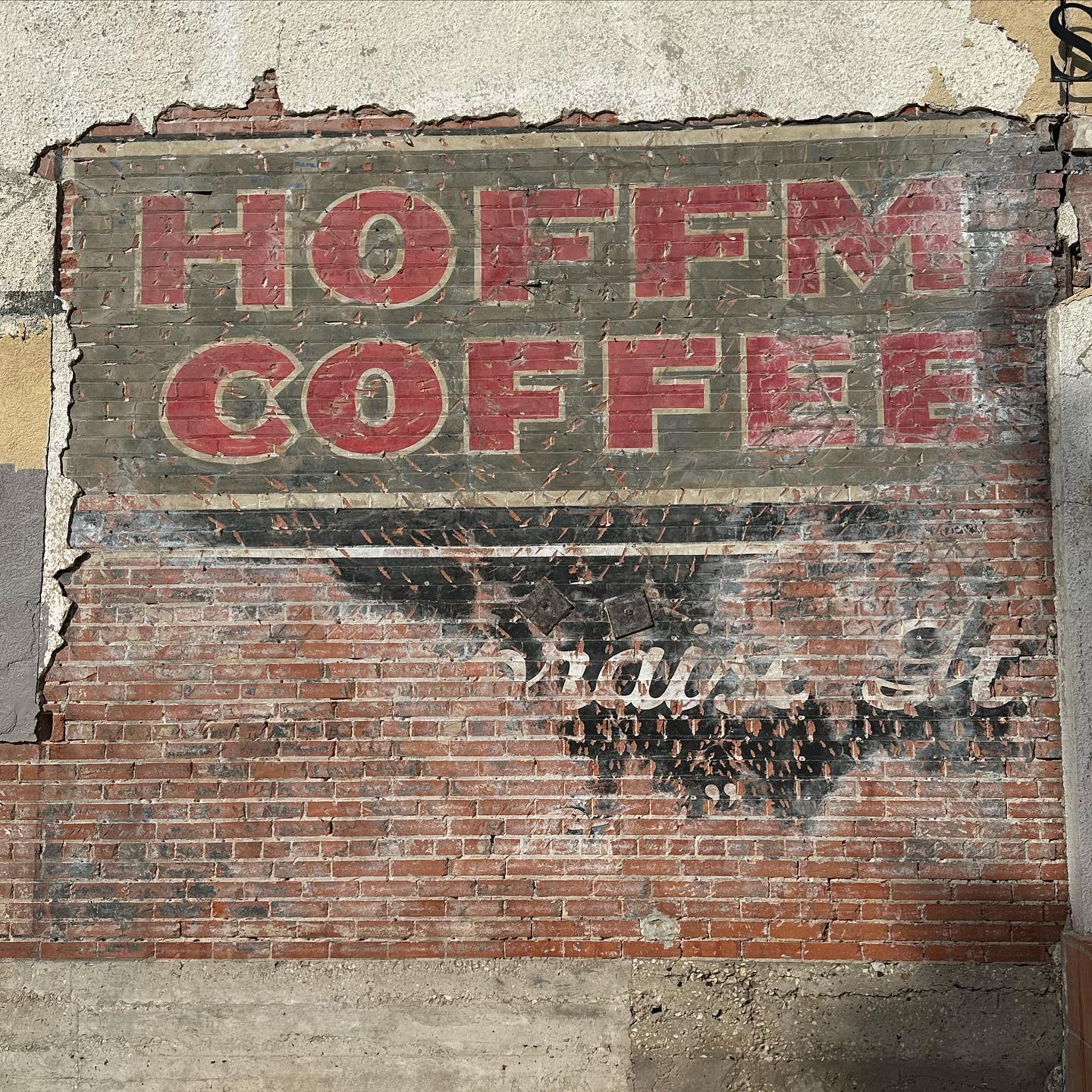

Ghost sign — hand-painted H and H on exposed brick solved
Artifact Snapshot
- Era:
- Type:
- Brands: H and H Blend Coffee
- Confidence: medium
Evidence and Sources
- On-site ghost sign photography, 331 Burnet Street, San Antonio (January 2023)
- Newspaper context linked within this post (1923–1932 Light and Express coverage)
Multi-photo survey from 1 January 2023 at 331 Burnet Street, San Antonio: hand-painted Hoffmann-Hayman Coffee lettering flanking the Smith Print entrance, a large illustrated tin device reading H AND H COFFEE, south-face panels where stucco failed or was keyed off brick, and the building corner at the railroad crossing. Together the frames document scale and lettering variants beyond the single-square composition on Hand-Painted H and H Lettering — Ghost Sign on Exposed Brick. Below we pair those photographs with 1923–1932 newspaper context—plant imagery, a documented 1928 Burnet fire, and fireproof language for the 601 Delaware works.
HOFFM COFFEE Hoffman’s
Photographs — 1 January 2023, 331 Burnet Street
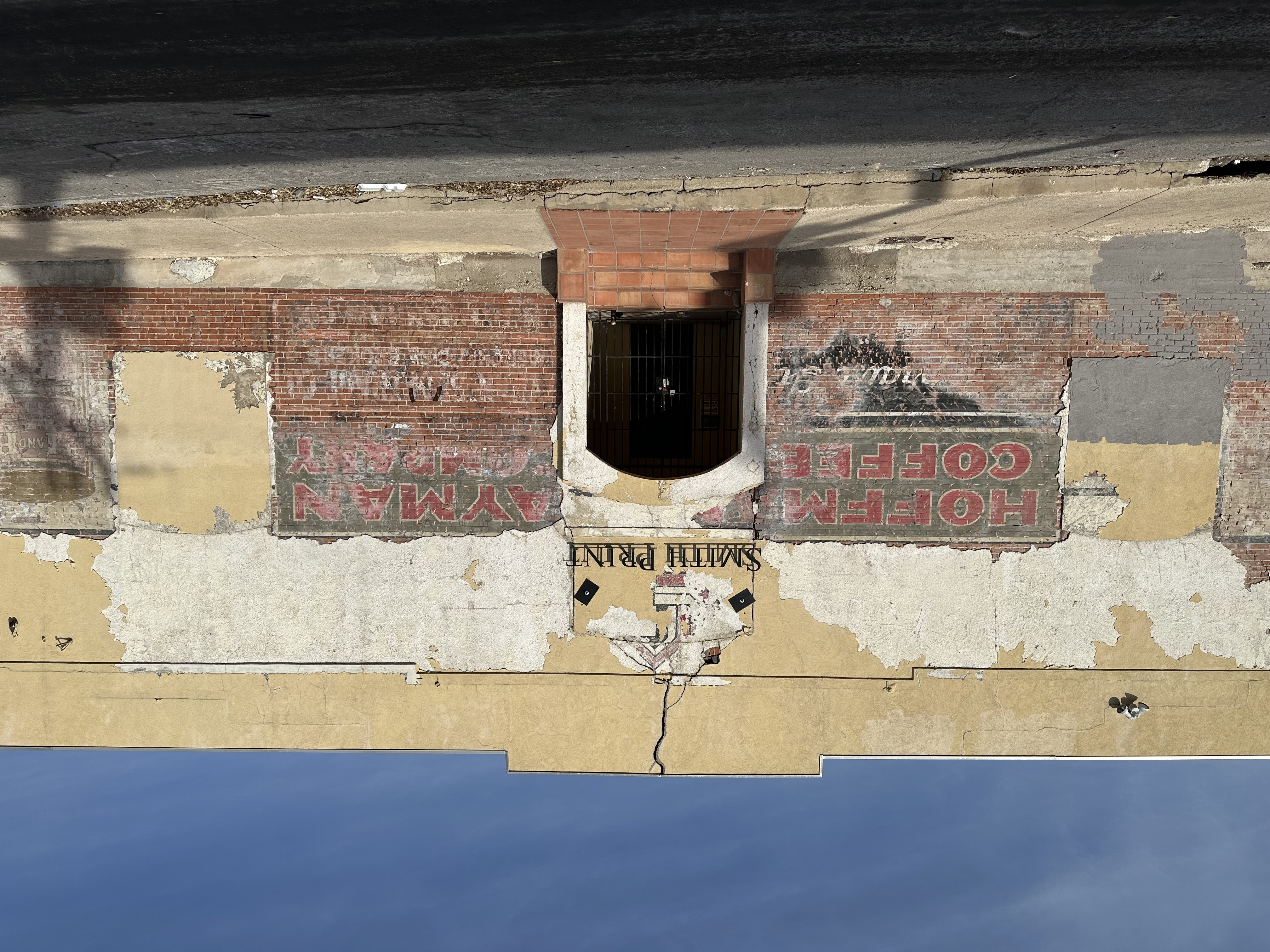
iPhone wide shot: Smith Print arch and paired Hoffman / Hayman ghost spreads. Contains a product image but it is not dominant as it might have been in an advertisement.
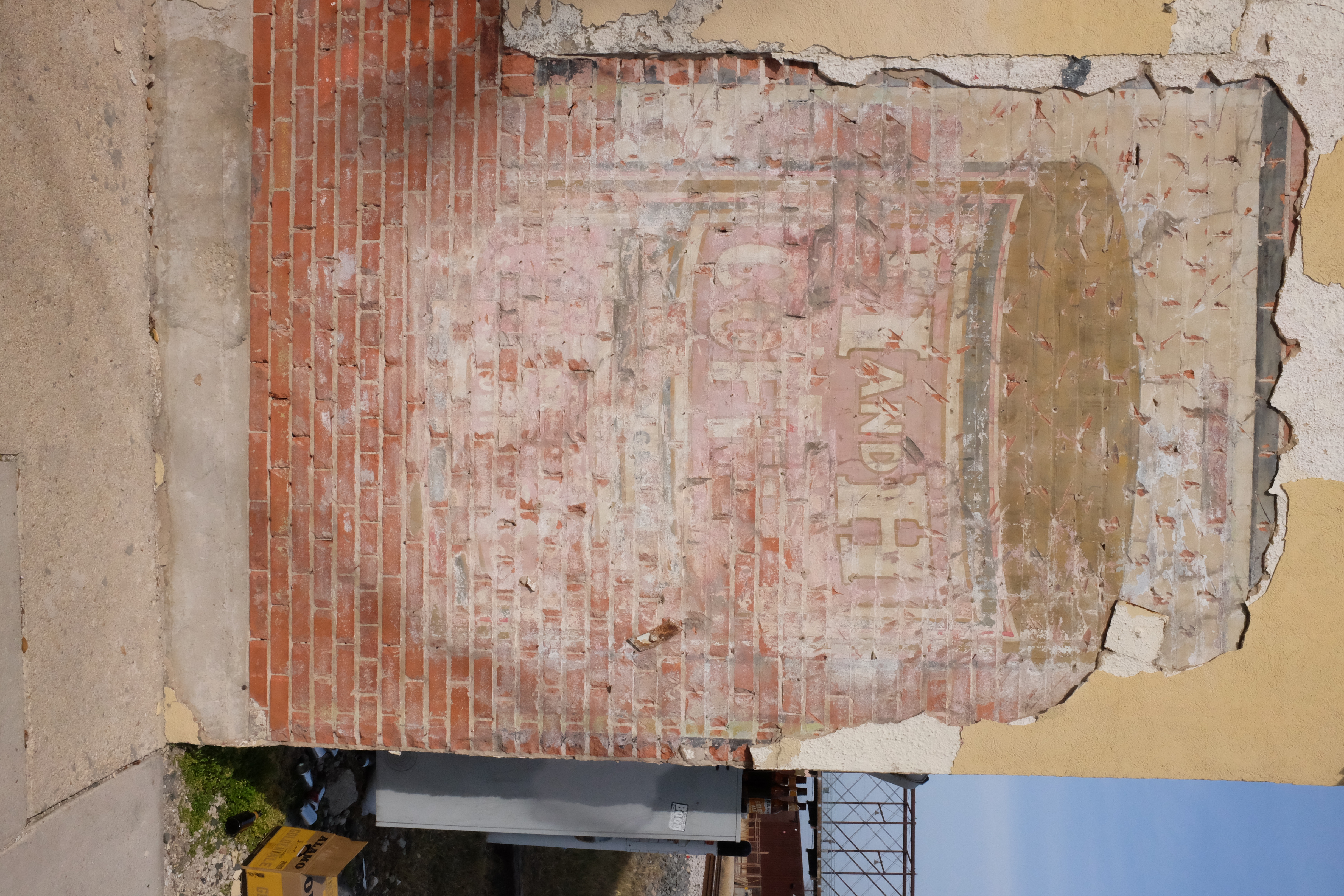
Painted coffeetin and H AND H COFFEE BLEND line; truss bridge and tracks on the right.
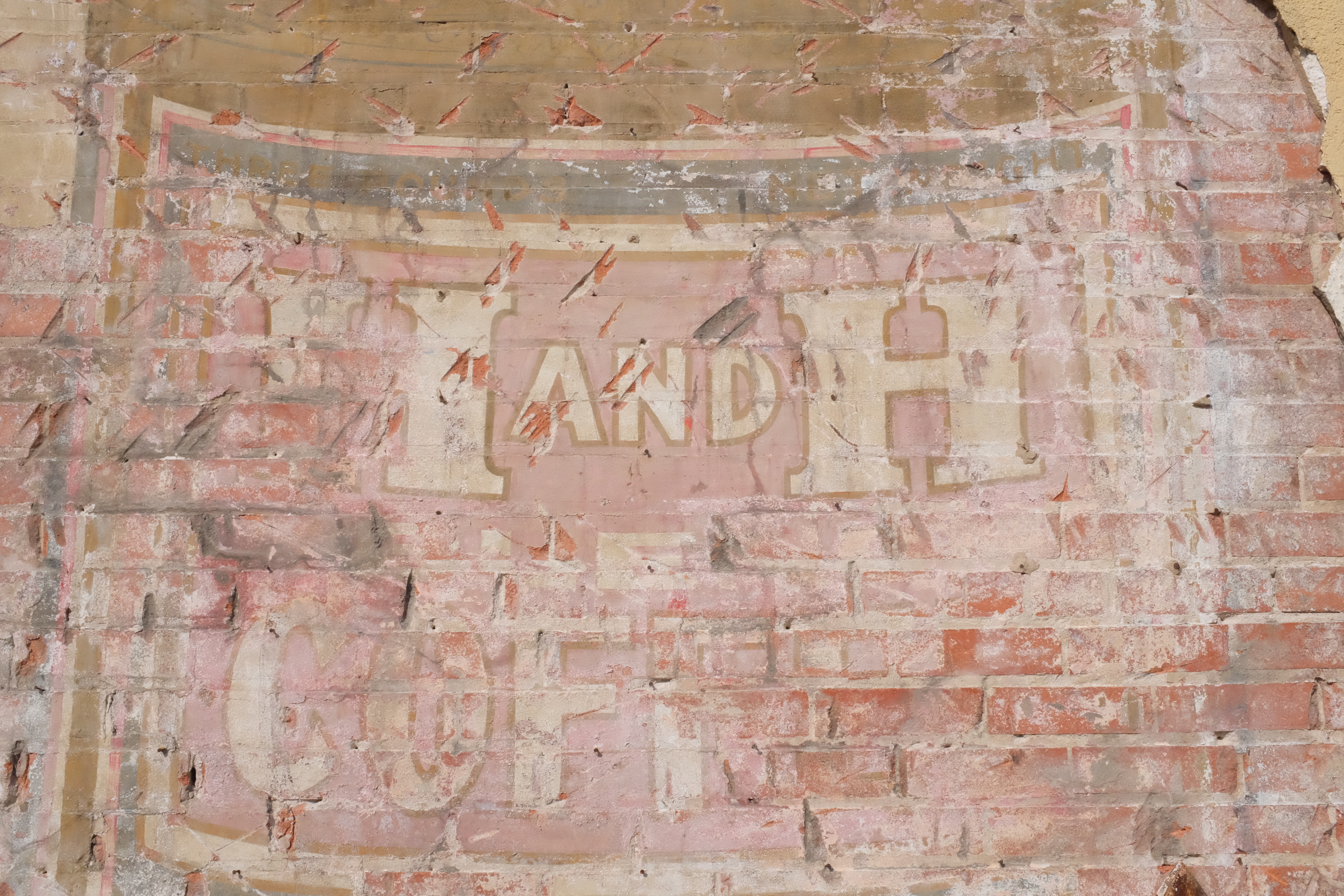
Framed block type and border, would have been red, navy, and gold; brick pecked to hold the later stucco coat.
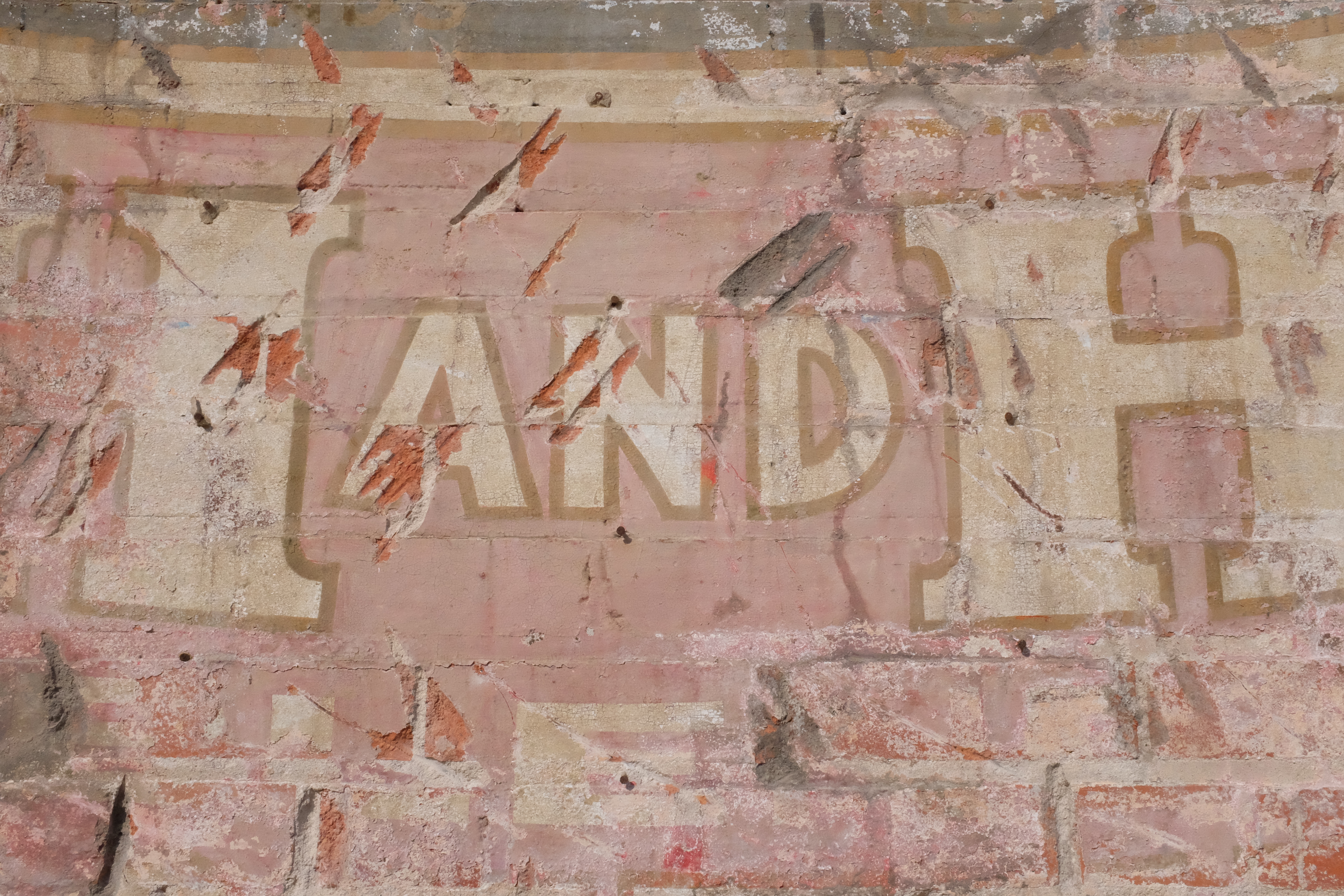
“H AND H” detail: cream letters and mortar joints.
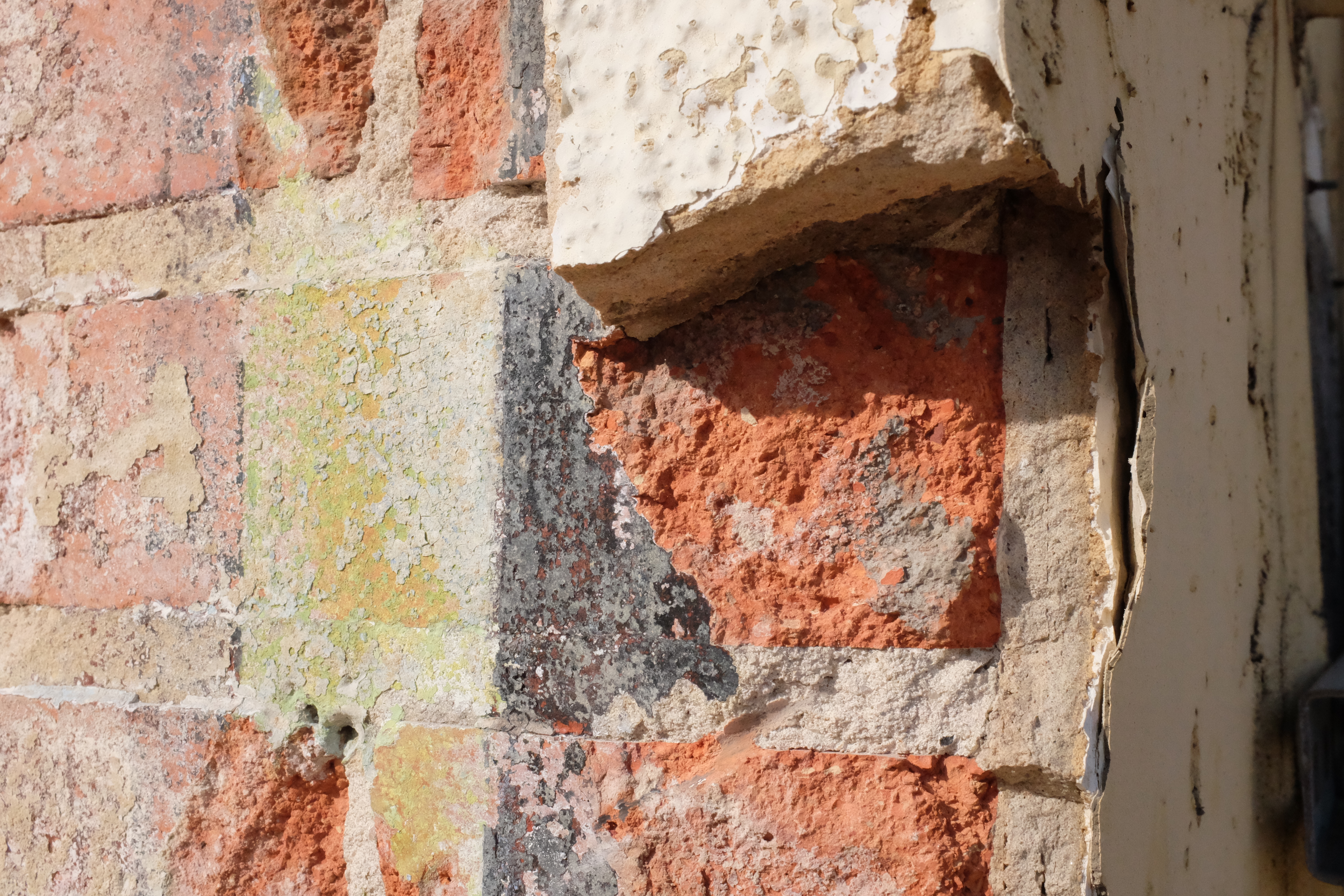
Stucco lip closeup: yellow and black bands on raw brick before stucco was applied.
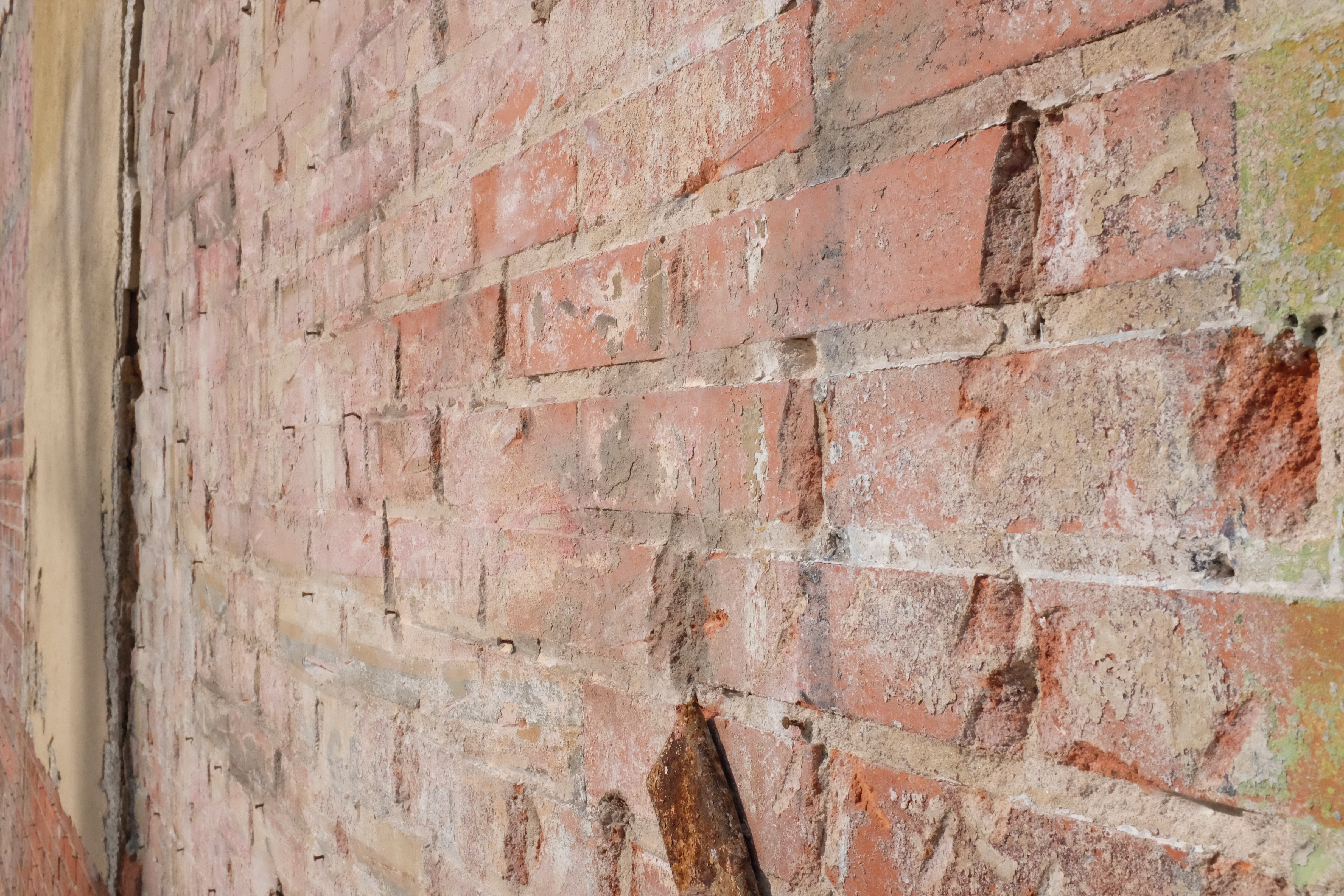
Along the south run: remaining stucco strip, nail tails, faint color ghosts. Freezing temperatures may have contributed to the final stucco failure.
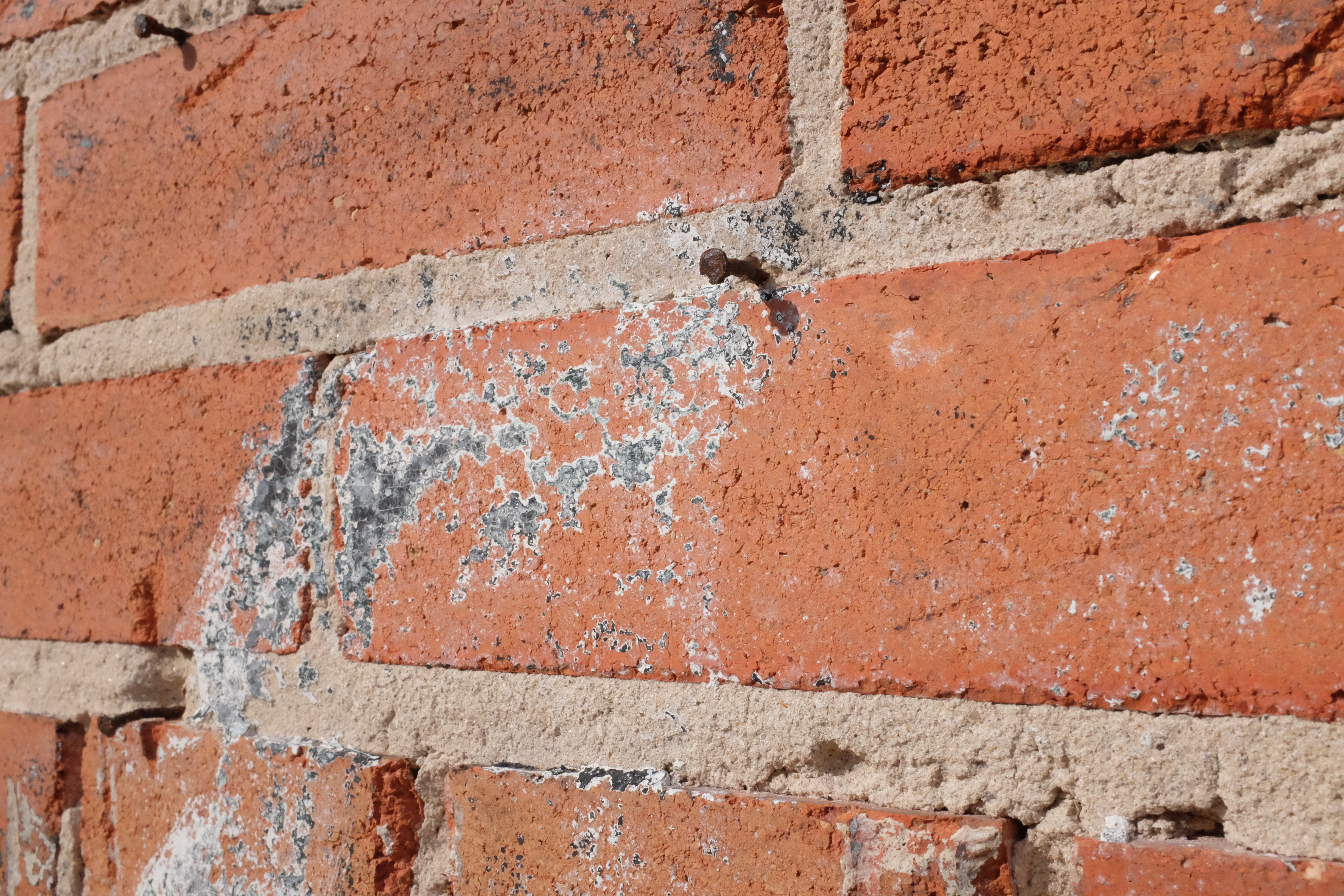
Tight texture: white and grey paint ghosts, rusting nails left from the stucco.
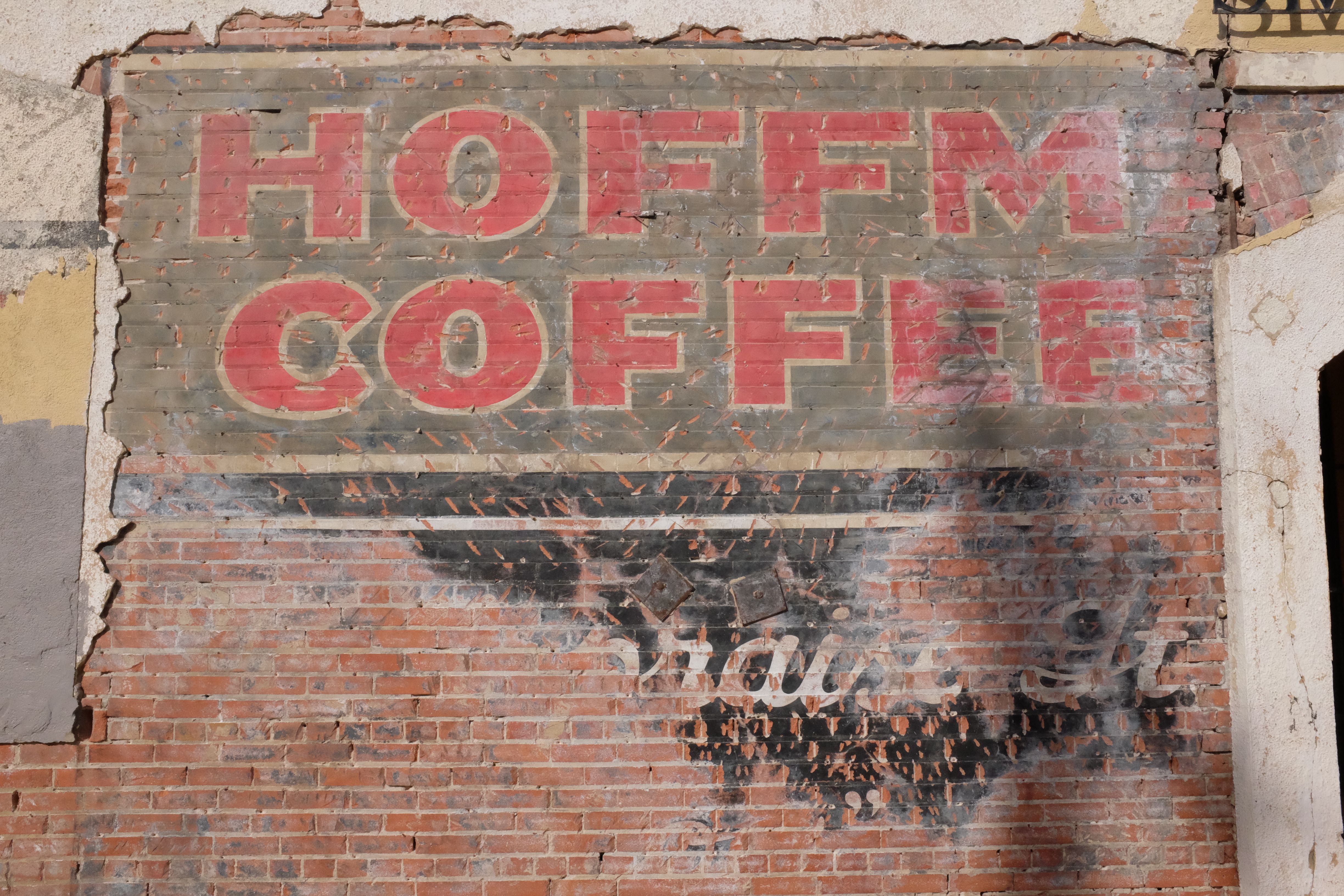
Two-line HOFFMAN COFFEE in red with light outlines on a dark ground;below in white on black field reads part of slogan …praise It.
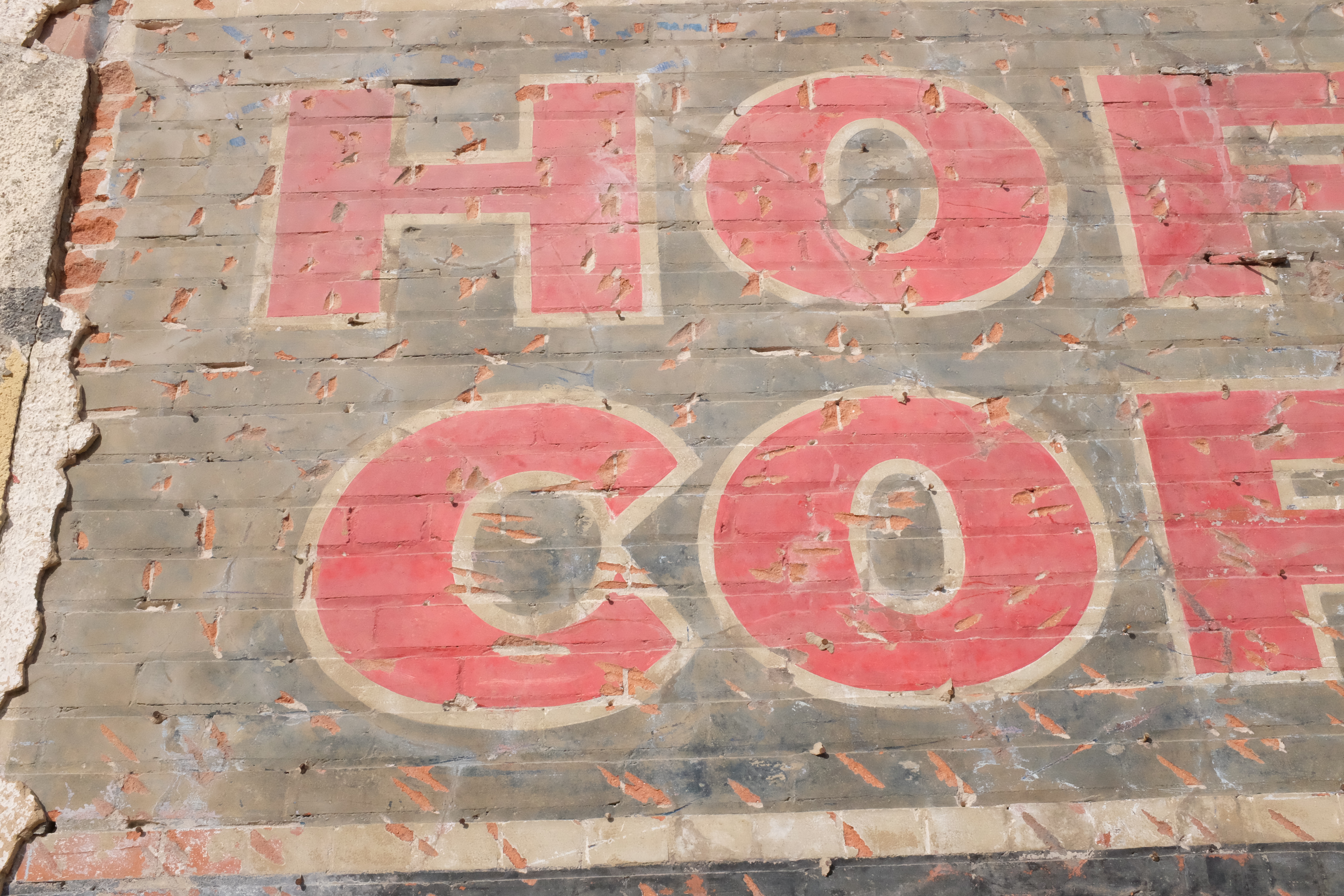
Close up of upper lines read HOF… and COF; ;.
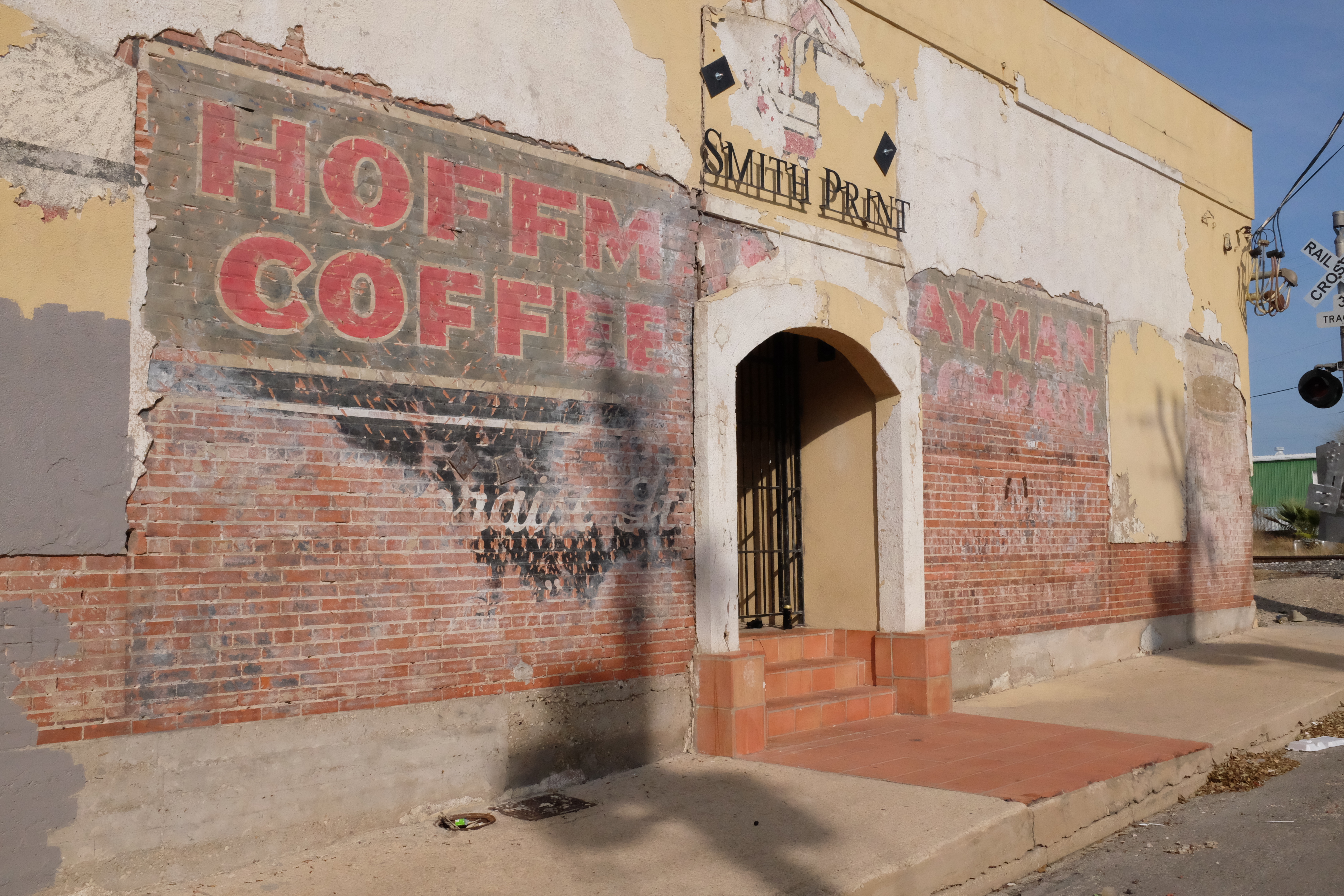
Street-level: central arch, Smith Print fascia, ghost type both sides; clay tile courses and crossbuck at the curb.
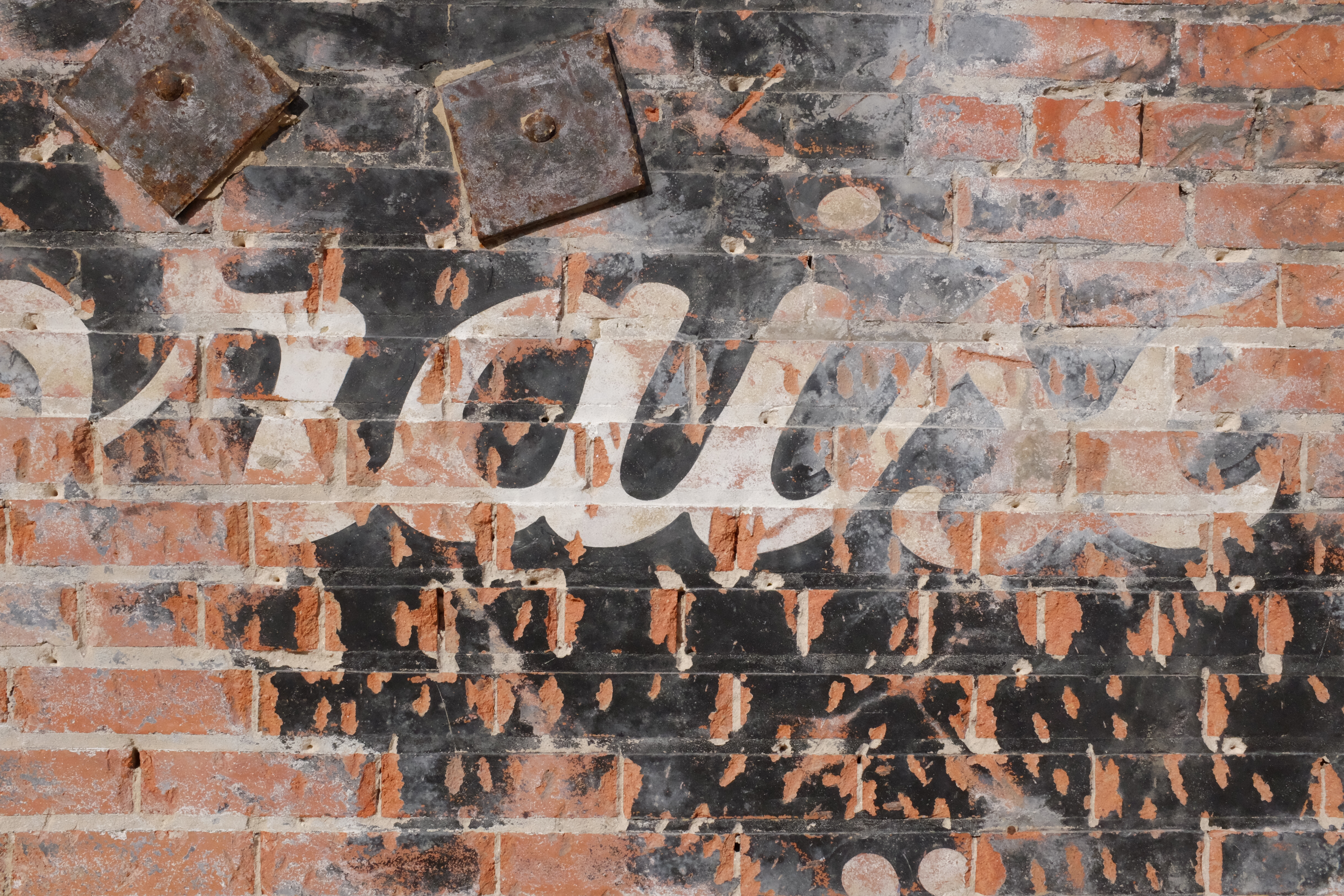
White script on black panel praise; cast-iron star ties in the brick.
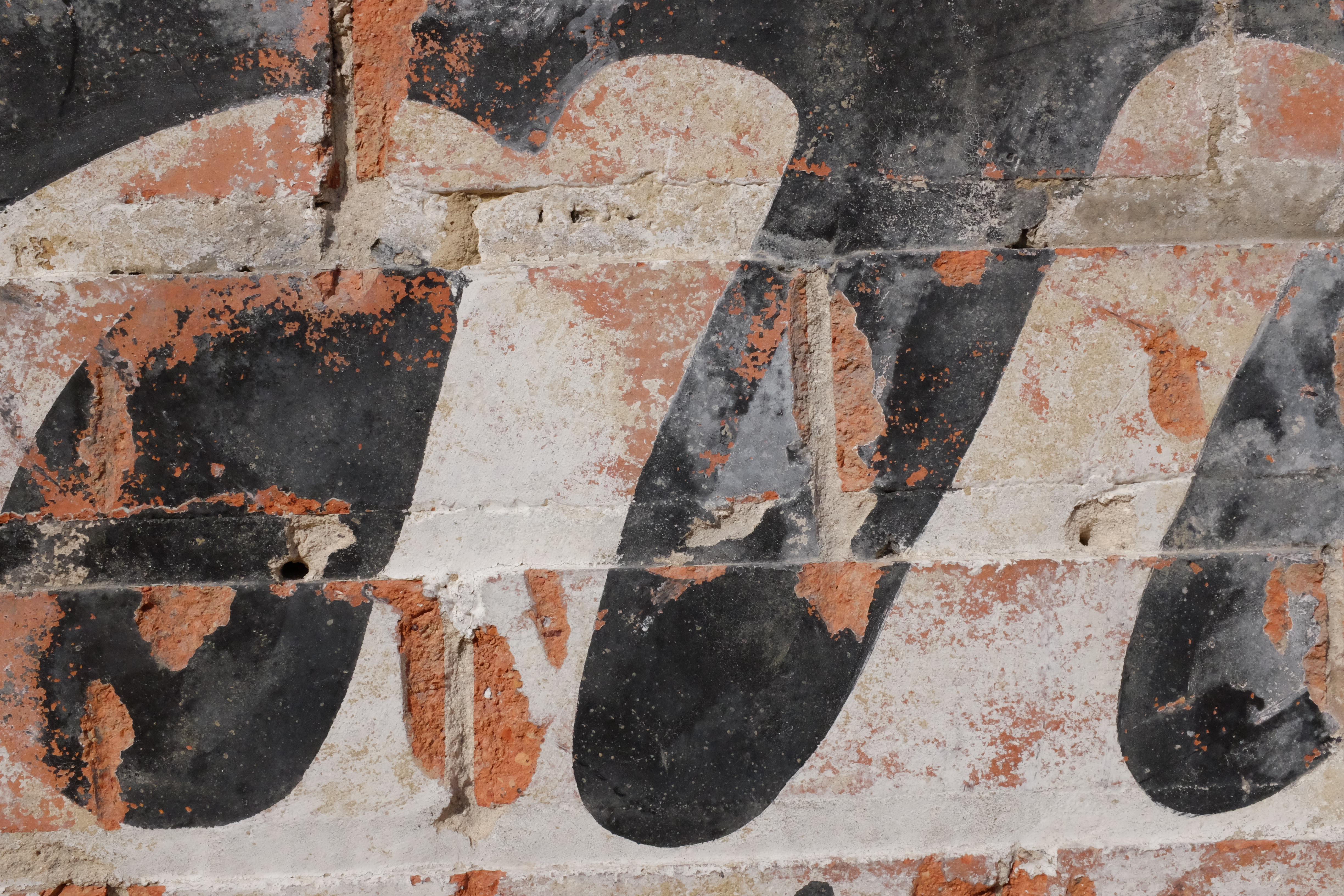
Heavy black slab-serif strokes of ai on flaking white—bottom of COFFEE-era lettering.
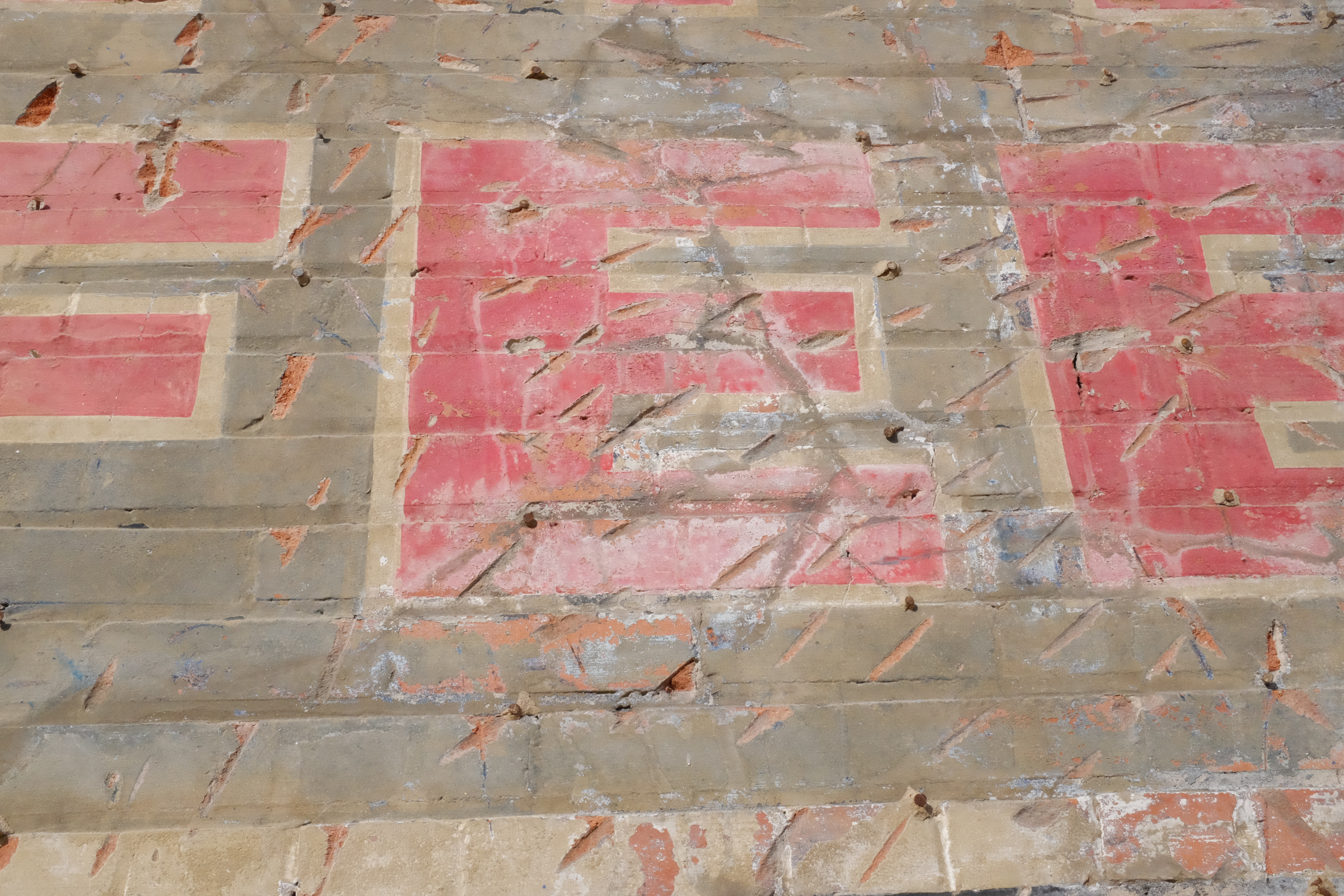
Red block letter with cream outline FEE; wall keyed and studded for coverings.
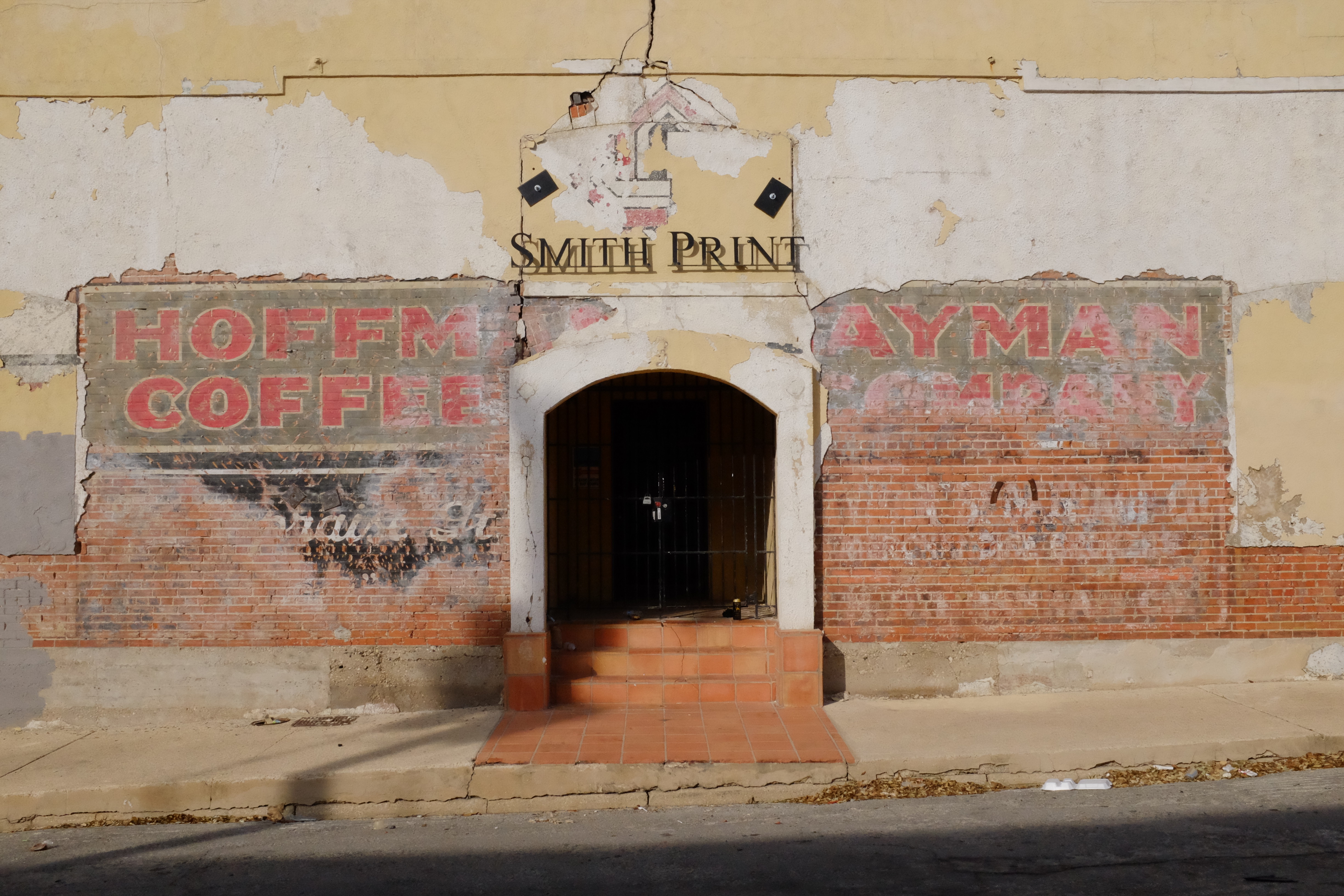
Higher vantage: full arch, terracotta steps, symmetric ghost panels.
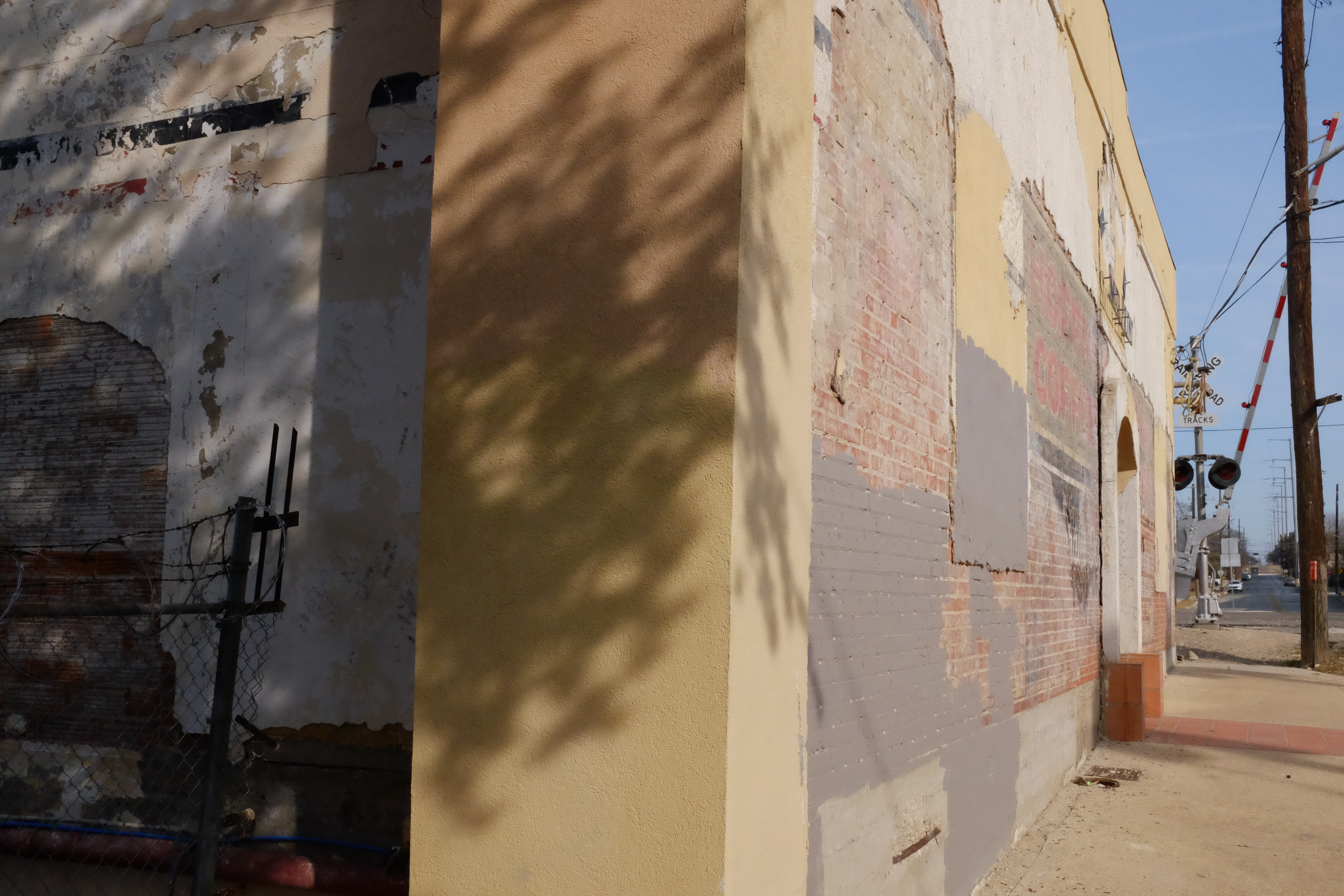
Southeast corner at the crossing: COFFEE line, gates, and crossbuck hardware.
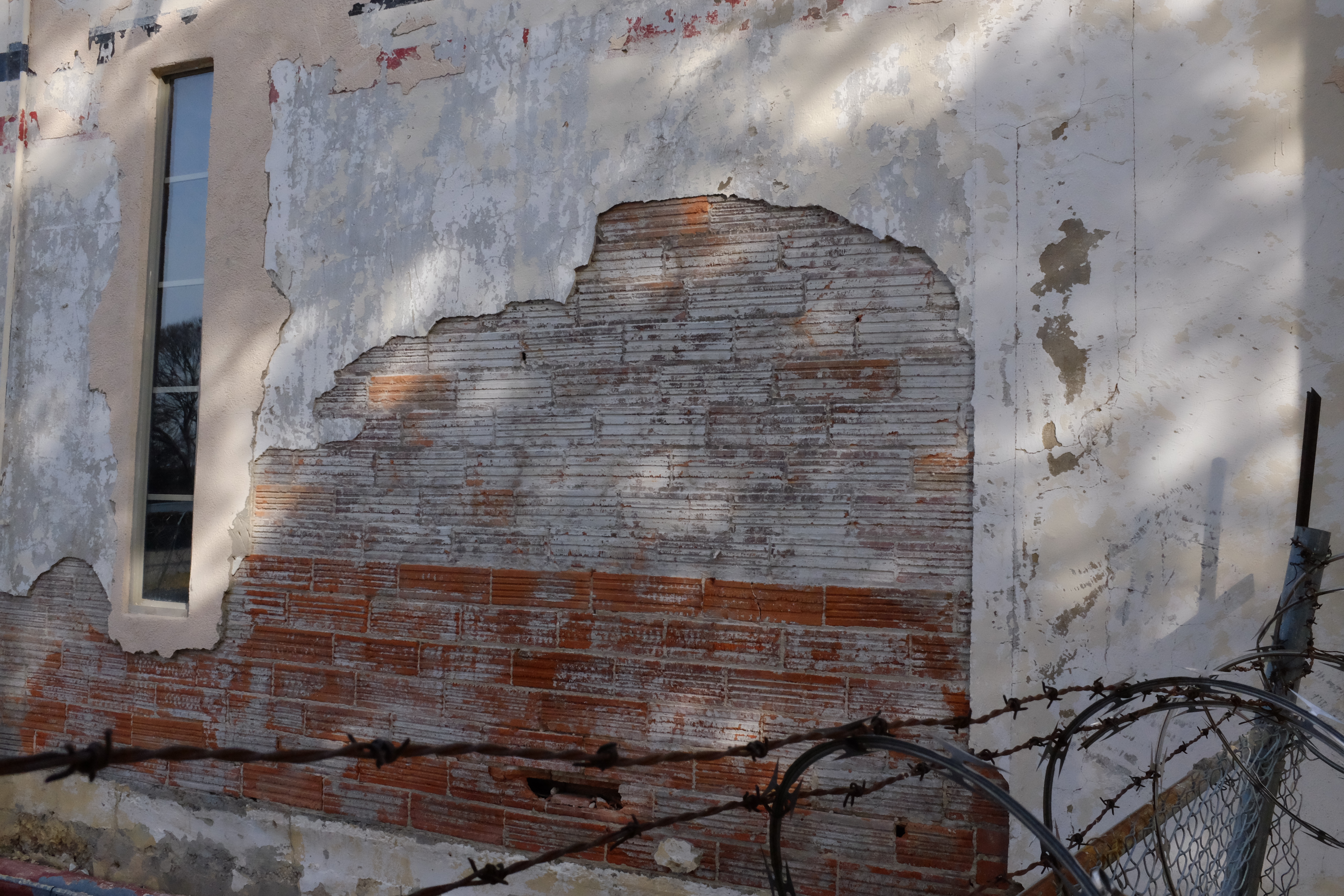
Hollow structural tile courses of west face; broad stucco loss above chain-link.
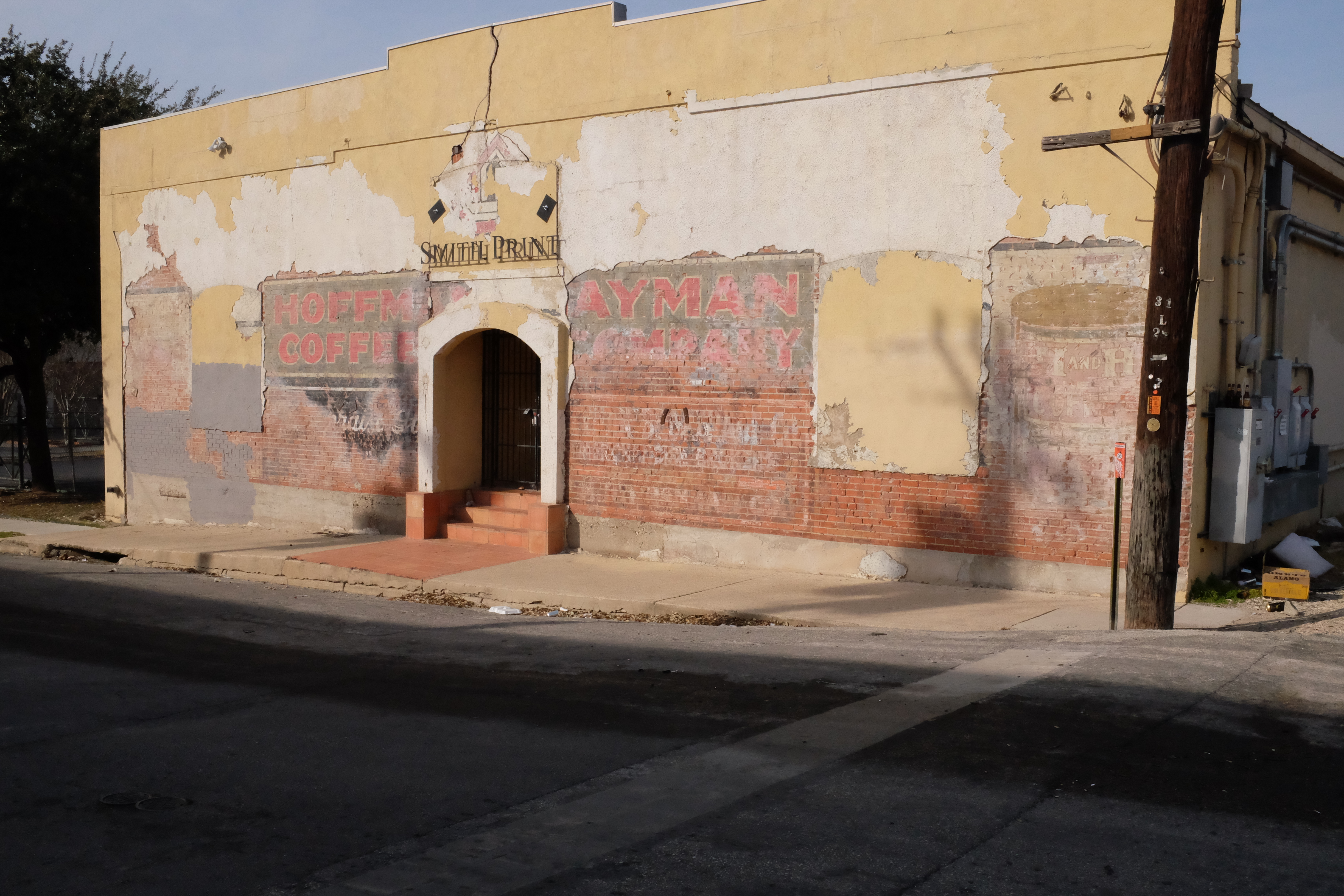
Structural clay tile and failed stucco. Archway for main entrance and outlines of covered windows match the ink drawing announcing H and H move to Burnet Street in 1923.
Newspaper context — plant imagery, Burnet fire, Delaware Street
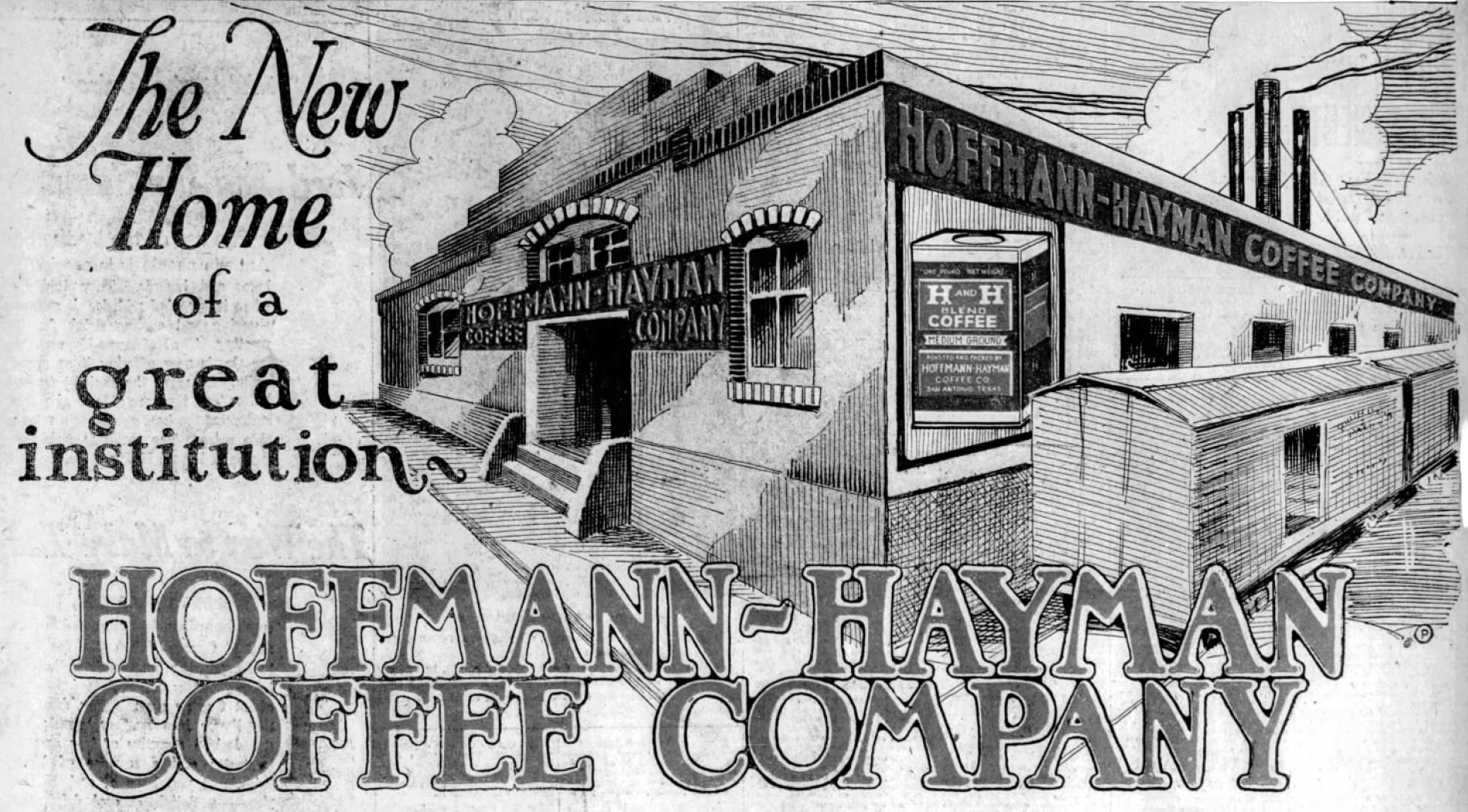
Crop from page 59: bird’s-eye plant rendering in the “New Home of a Great Institution” spread.
The 1923 San Antonio Light spread “The New Home of a Great Institution” shows the company’s plant and ambitions at scale; the plant rendering crop isolates that artwork. Together they bracket how Hoffmann-Hayman presented itself in print, while the ghost sign is a rare surviving look at paint on masonry at the street level entrance. As with later drawings of the Delware factory in articles, they do not match the actual buildings exactly.
Fire at Burnet Street and fireproof construction at 601 Delaware
Contemporary coverage confirms a 1928 fire at the Hoffman-Hayman works on Burnet Street, not only hypothetical risk from roasting and warehouse use:
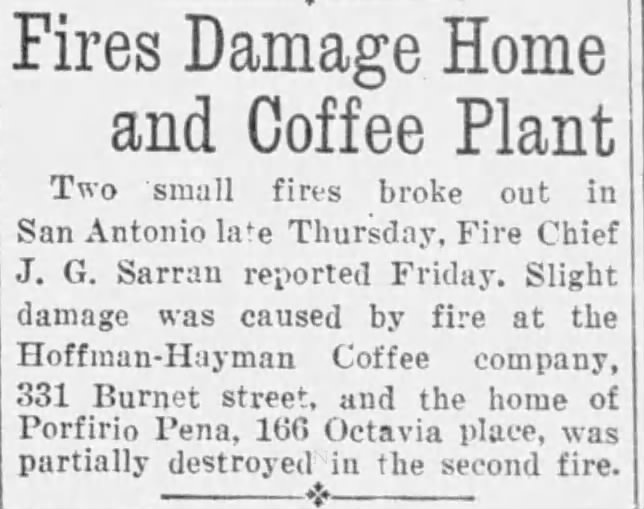
Page 21 brief: small fire at Hoffman-Hayman, 331 Burnet, same era as the ghost-sign wall.
Full transcription and citation: Fires damage home and coffee plant — San Antonio Light, 31 August 1928.
When the firm announced the new Delaware Street factory in 1932, the San Antonio Light piece explicitly called out fireproof construction—alongside square footage, architects, and the Crystalvac roof display. That language reads differently once a Burnet-era fire sits in the same timeline; see Hoffmann-Hayman plant modern throughout — San Antonio Light, 24 July 1932 (transcription includes the fireproof line; Hoffmann-Hayman was at 331 Burnet about ten years).