
Skyline of San Antonio — a Summerville Photo Linen Postcard
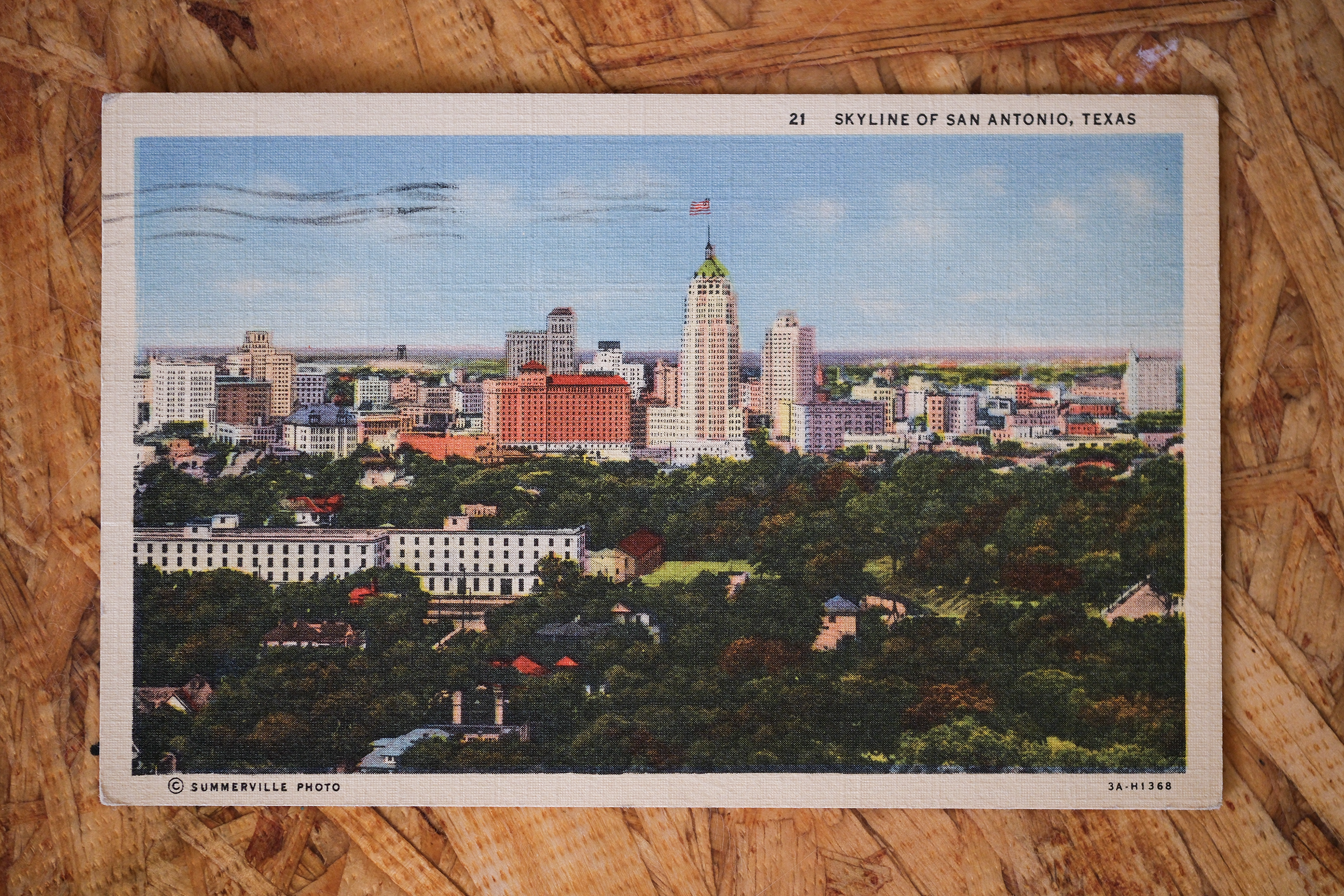
This is not an H and H object — but the credit line in the lower-left corner is why it is here. The card reads “21 — SKYLINE OF SAN ANTONIO, TEXAS,” a colorized linen view looking across the downtown rooftops toward the slender setback tower at center — the Smith-Young Tower (today the Tower Life Building), completed in 1929 and for decades the tallest thing on the San Antonio skyline. And down in the corner: “© Summerville Photo.”
Summerville Photo is the San Antonio studio that made the large-format 1929 Hoffmann-Hayman employee panorama — the “two H&H billboards side by side” group photograph whose left half sits in this collection as the “Fragrant…” billboard photo. The H&H panorama and this tourist postcard are two outputs of the same shop: one a private commission for a coffee company’s office, sales, and plant staff; the other a mass-market view card sold to visitors. Holding a signed, dated, commercially-printed Summerville product gives us a second, independent sample of the studio’s hand and output — useful comparandum material as we keep working to pin down the studio’s attribution on the H&H photographs.
The back — a 1948 message, mailed from the road
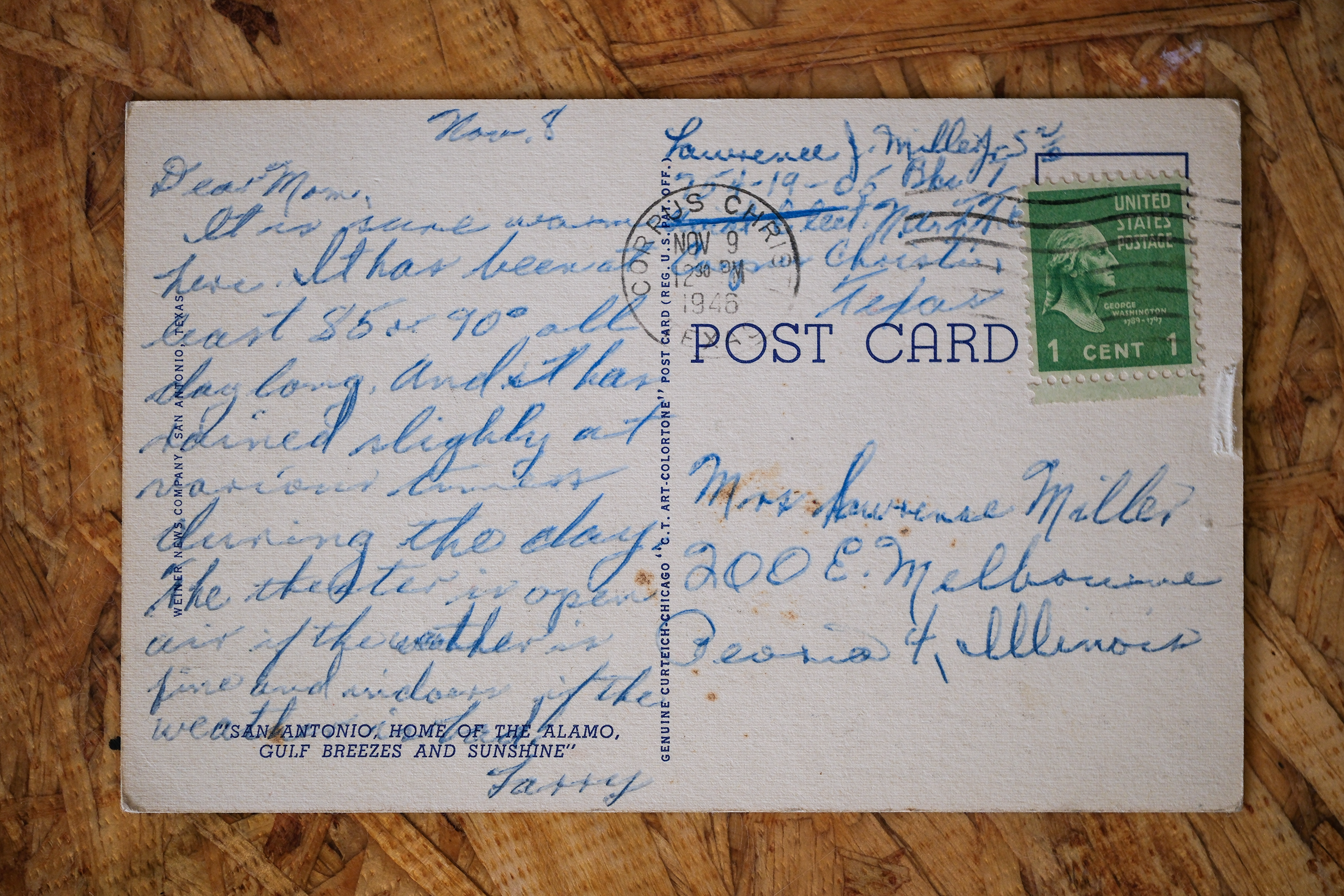
Unlike most cards we keep for their faces, this one is postally used, which dates its life rather than just its printing. A 1-cent Washington “Prexie” stamp and a Texas duplex cancel place the mailing before the 1952 jump to the 2-cent postcard rate — consistent with the handwritten 1948 in the message. “Larry” (Lawrence J. Miller) writes home to Mrs. Lawrence Miller at 200 E. Melbourne, Peoria 4, Illinois, complaining cheerfully about the heat — “85 to 90° all day long” — under the card’s own boilerplate, “San Antonio, Home of the Alamo, Gulf Breezes and Sunshine.” The Curteich-style serial 3A-H1268 marks it as a linen-era card; the postmark tells us it was still circulating, and selling, a decade or more after it was printed.
Accession and references
- Accession: HH-EPHEMERA-2026-0001
- Related: the 1929 Summerville H&H panorama — Hoffmann-Hayman Employees at the “Fragrant…” Billboard
- Receipt: on file

